DAIROOL

Semi-hard Cheese Production Solutions

Semi-Hard Cheese Production Lines for Small & Medium Dairy Plants

Plan a practical semi-hard cheese production line for Gouda, Edam, Caciotta and related cheese varieties. Explore process requirements, equipment selection, batch planning, pressing, brining and ripening with DAIROOL.

Target ProductsGouda · Edam · Caciotta and related semi-hard styles
Product ChangeoverCleaning and switch time between varieties
Peak CoordinationVat discharge → press peak → brine → ripening

KEY PROCESS

Key Process

Each cheese style is built on specific process controls, not a fixed machine list. Milk treatment, curd making, pressing and brining, and ripening decide moisture, texture, flavor and yield. Reading these four first shows why the cheese and its process — not the milk volume — should shape the line.

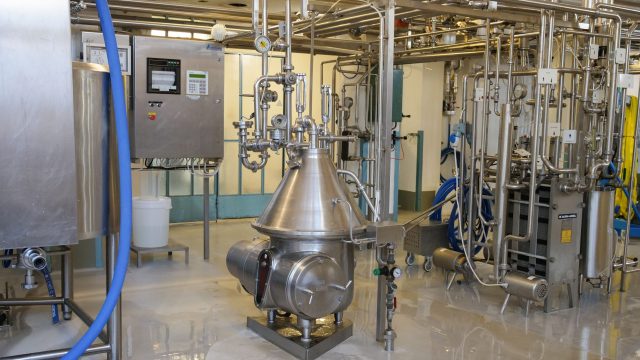
Milk Standardization & Heat Treatment

Fat-to-protein ratio and heat treatment set the cheese's yield, body and ripening potential. The right standardization keeps batches consistent, while heat intensity must suit the cheese — too harsh and it weakens curd and slows flavor development.

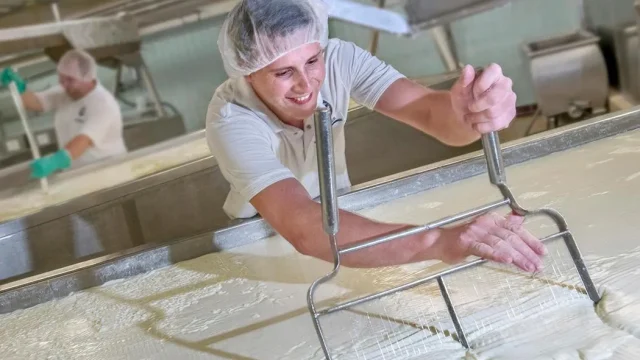
Coagulation & Curd Cutting

Cut size, cooking and whey drainage decide how much moisture the curd keeps, which shapes texture and final acidity. Larger cuts hold more water for a softer cheese; smaller cuts and cooking dry the curd for a firmer body.

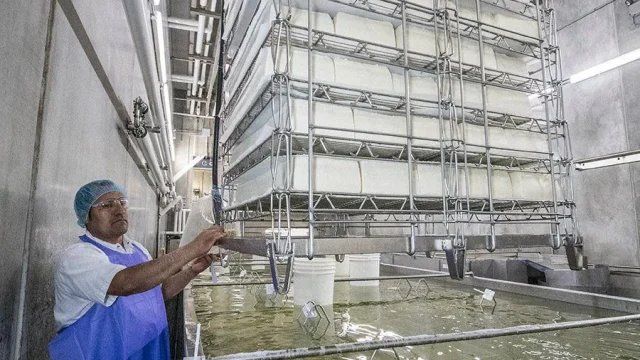
Pressing & Brining

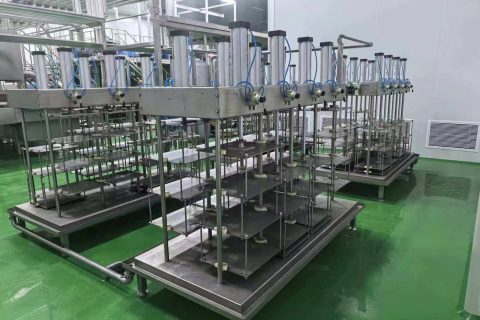
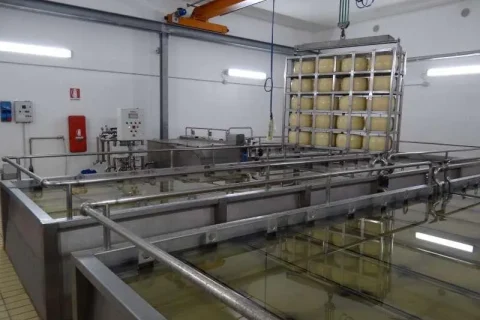
Pressing consolidates the curd into a closed, even body and expels remaining whey, while brining draws in salt that forms the rind and regulates moisture and ripening. Both steps must match the cheese's size and target salt, or texture and flavor stay uneven.

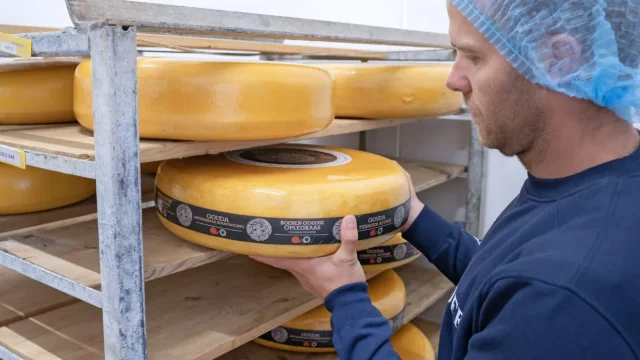
Ripening & Flavor Development

Temperature, humidity, airflow and time turn a fresh, bland curd into a cheese with character — flavor, body and rind all develop in the ripening room. Each variety needs its own conditions and holding time, which is why ripening space and schedule shape the line.

OVERVIEW

Production Line Overview

Use this overview to assess four key planning factors: target cheese varieties, production capacity, operating schedules and utility requirements. Each production line is configured around the product mix, milk supply and factory conditions rather than a fixed equipment package.

Cheese Varieties & Process Route

Target ProductsGouda · Edam · Caciotta and related semi-hard styles
Process RouteCurd making → Pressing → Brining → Ripening
Variety DifferencesMoisture, pressing, brining and ripening time vary by cheese
Shared vs DedicatedShared milk preparation; pressing, brining and ripening per product

Cheese Varieties & Process Route
Target ProductsGouda · Edam · Caciotta and related semi-hard styles
Process RouteCurd making → Pressing → Brining → Ripening
Variety DifferencesMoisture, pressing, brining and ripening time vary by cheese
Shared vs DedicatedShared milk preparation; pressing, brining and ripening per product

Capacity & Batch Basis

Daily Milk BasisSet by your milk supply and collection schedule
Batch Working VolumeNominal vat size vs usable working fill
Yield BasisCheese ≈ 10–12% of milk, by variety (reference)
Production ModeBatch processing; single or double shift
Capacity & Batch Basis
Daily Milk BasisSet by your milk supply and collection schedule
Batch Working VolumeNominal vat size vs usable working fill
Yield BasisCheese ≈ 10–12% of milk, by variety (reference)
Production ModeBatch processing; single or double shift

Operating Schedule & Flexibility

Batch CadenceBatches per day = daily milk ÷ usable batch fill
Product ChangeoverCleaning and switch time between varieties
Peak CoordinationVat discharge → press peak → brine → ripening
Ripening OccupancyRipening stock = daily output × ripening days
Operating Schedule & Flexibility
Batch CadenceBatches per day = daily milk ÷ usable batch fill
Product ChangeoverCleaning and switch time between varieties
Peak CoordinationVat discharge → press peak → brine → ripening
Ripening OccupancyRipening stock = daily output × ripening days

Utilities, Cleaning & Site

Heat SourceHot water for pasteurization; gas or electric per site
Cooling LoadChilled water for milk cooling and ripening rooms
CIP CoverageConfirm which equipment and lines CIP reaches
Site & ExpansionFootprint zoning plus reserved space for growth
Utilities, Cleaning & Site
Heat SourceHot water for pasteurization; gas or electric per site
Cooling LoadChilled water for milk cooling and ripening rooms
CIP CoverageConfirm which equipment and lines CIP reaches
Site & ExpansionFootprint zoning plus reserved space for growth

CORE PERFORMANCE

Core Performance

A line's true output is decided by how batches run through it, not by rated machine capacity. This section shows how cycle time, peak loads and ripening stock are coordinated, so you can spot the real bottleneck before equipment is bought.

Capacity Follows the Schedule

The slowest stage sets the pace→
Real capacity comes from how each batch moves through the vat, press, brine and ripening room together, not from adding up rated machine outputs. A mismatch at any one step makes every other machine wait.

Batch Capacity & Cycle Time

Daily milk becomes a set number of batches only after the full cycle is counted — fill, curd processing, drain and cleaning. Usable working volume and real cycle time, not nominal vat size, decide how many batches fit in a day.

Real cycle time

Peak Equipment Coordination

A vat empties one whole batch at once, so the press and brine must absorb a peak — not the daily average. Overlapping batches and overnight holding mean downstream stations are sized to the worst moment, not the mean.

Peak, not average

Ripening & Inventory Balance

Ripening keeps weeks of production on the shelf before sale, so daily output must balance against ripening space and working capital. A ripening room too small quietly caps the whole line, whatever the vats can make.

Stock across days

PROCESS FLOW

Process Flow

Semi-hard cheese production involves milk preparation, controlled coagulation, curd cutting, whey drainage, molding, pressing, salting and ripening. The exact process sequence and operating conditions depend on the cheese variety, milk composition and target product characteristics.

Key Process Stages

01 ·Milk Reception & Preparation
Raw milk is received, tested, filtered and standardized as required to meet the composition and quality targets for semi-hard cheese production.
02 · Heat Treatment & Cooling
Milk undergoes the selected heat treatment and is cooled to the appropriate temperature for starter culture addition and coagulation.
03 · Starter Culture & Coagulation
Starter cultures and coagulant are added under controlled conditions to develop acidity and form a curd suitable for further processing.
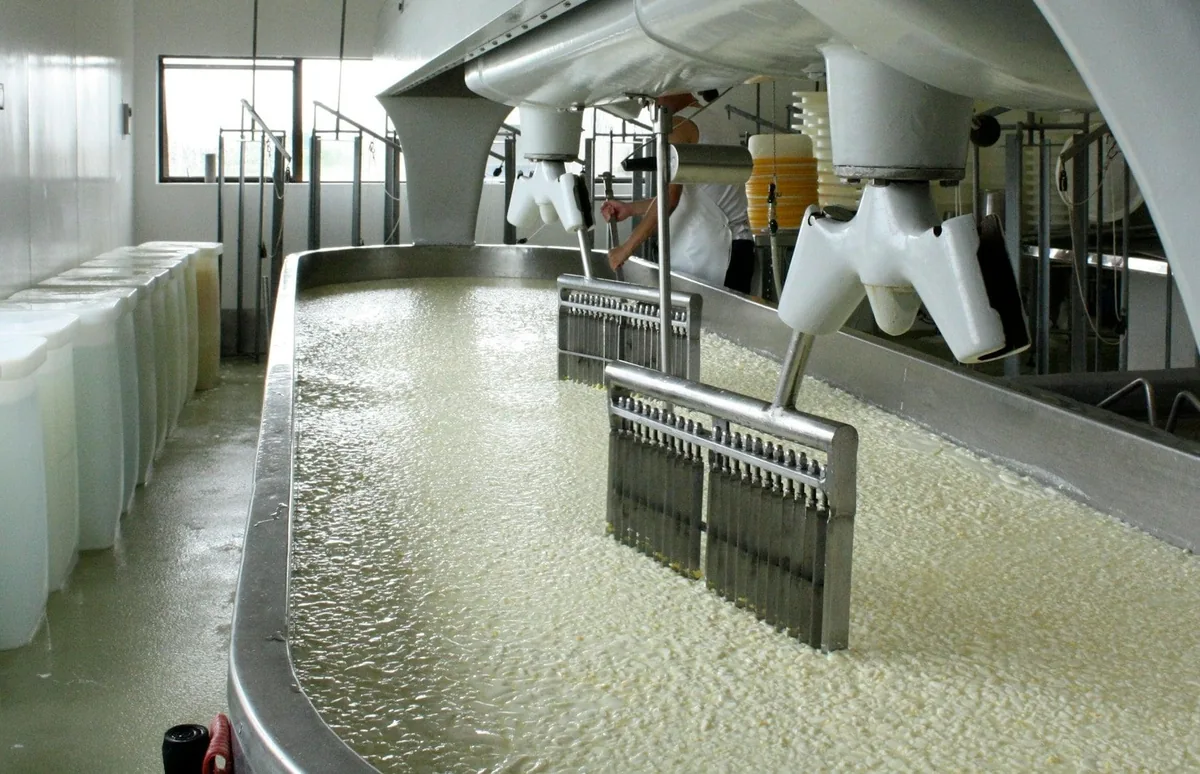
04 · Curd Cutting, Stirring & Whey Drainage
Curd is cut, stirred and processed to control whey release, moisture and texture. Whey from drainage and pressing is collected for appropriate handling or further processing.
05 · Molding & Pressing
Curd is transferred into molds and pressed as required to develop the intended cheese shape, structure and moisture distribution.
06 · Salting / Brining
Salt is introduced through dry salting or brining. Salt concentration, temperature, hygiene and contact time are managed according to the cheese variety.
07 · Ripening & Packaging
Controlled ripening develops the desired cheese texture and flavor. Temperature, humidity, airflow and ripening time are adjusted according to the cheese variety, followed by appropriate cutting and packaging.

Process variations: Gouda, Edam and Caciotta may require different curd treatments, pressing methods, salting conditions and ripening schedules. Shared equipment can support multiple products where technically appropriate, but each product requires its own validated process parameters and production schedule. Whey from curd drainage and pressing should be collected and managed as a separate material stream.

CORE EQUIPMENT

Core Equipment

The right cheese production line is not simply a collection of machines. Each system must match your cheese varieties, milk capacity, batch schedule and production goals. Explore eight key equipment decisions that affect processing efficiency, product consistency and investment.

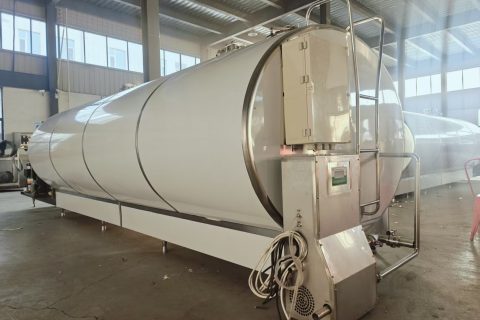
Milk Reception, Standardization & Cooling

How much buffer, and what standardization?

Match reception and cooling to delivery timing and fat-protein standardization, not daily volume. An undersized buffer stalls the vat; skipping standardization gives uneven cheese.

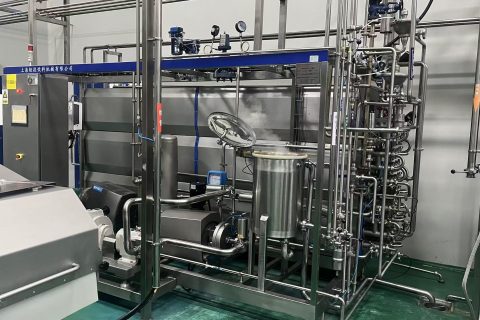
Milk Pasteurization & Heat Treatment

Batch or Continuous Processing?

Match pasteurizer type and hourly capacity to your vat-filling rhythm and shift length, not just daily volume. Sized only to the daily total, it leaves vats waiting or runs half-empty.

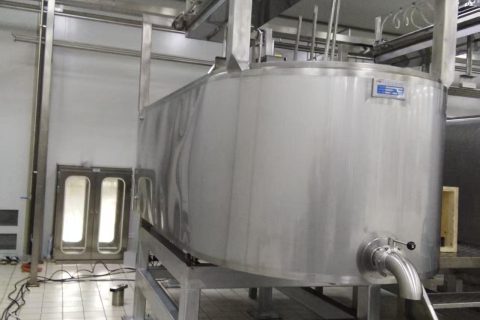
Cheese Vat & Curd Processing

How many vats, at what working volume?

Vat size and quantity follow batch scheduling, not daily volume divided by nominal capacity. Check working volume and changeover cleaning — an oversized vat slows small batches with no fallback.

Whey Collection & Utilization System

A disposal cost or a second revenue?

Quantify whey volume and check local uses — feed, food, or whey cheese — before buying equipment. Invest in a whey line only where volume and a paying market justify it.

Molding & Pressing Equipment

Daily weight — or the per-batch peak?

Size molds and press stations to each vat discharge, not average daily weight. Add turning, overnight and overlapping batches — under-sizing makes curd wait into the next day.

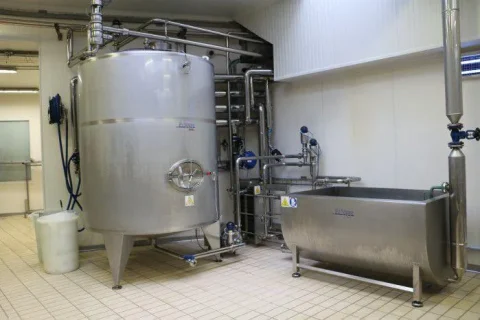
Brining & Salting System

How much cheese sits in brine at once?

Size the brine tank by how much cheese sits in salt at once, not by daily kilograms. That is daily output times brining hours, by cheese size; plan for overnight batches or it bottlenecks.

Ripening & Environmental Control

Daily output — or total maturing stock?

Size the ripening room for maximum maturing stock — daily output times each cheese's ripening period. An under-sized room becomes a long-term bottleneck and ties up capital in unsold cheese.

CIP Cleaning & Utility Systems

How much CIP — and what utilities?

Confirm what the CIP reaches — vats, pasteurizer, lines — and size heat, chilled water and air to real load. A line that skips core equipment in cleaning is an operating-cost trap.

CONFIGURATION

Line Configuration & Options

Every line needs essential process functions, plus additions that depend on your products, scale and plant — and automation that should follow your labor and consistency needs. This section separates what is essential, what is conditional, and what can be phased, so you buy the right scope, not a fixed package.

Standard Line

The essential process systems a semi-hard line needs — expressed as functions, not a fixed equipment package. Existing, verified equipment can often be reused.

  • Milk Reception & Heat Treatment: — Cooling, storage and pasteurization for safe, consistent milk supply.
  • Cheese Vat & Curd Processing: — Culture and rennet dosing, coagulation, cutting, cooking and whey drainage.
  • Whey Drainage & Collection: — Safe whey removal to feed, sale or compliant treatment.
  • Molding & Pressing: — Forms and consolidates the curd to the target moisture and shape.
  • Brining: — Salt uptake for preservation, flavor and rind formation.
  • Ripening: — Controlled temperature and humidity to mature flavor and texture.
  • Hygienic Cleaning: — Sanitary design and wash-down provisions; a dedicated CIP station is optional.

Optional Modules

Additions configured only when your products, scale, plant or budget call for them. Each has a compliant fallback if it is not purchased.

  • Milk Standardization System — Adjusts fat and protein when milk varies or products need set ratios.
  • Dedicated CIP Station — Automatic cleaning for many tanks and lines; manual wash-down otherwise.
  • Brine Cooling & Treatment — Keeps brine temperature and hygiene stable at higher throughput.
  • Whey Utilization Equipment — Worthwhile only where whey volume and a local market justify it.
  • Small-Batch Cheese Vat — For trial batches and low-volume varieties without tying up the main vat.
  • Packaging Integration — Included when packaging is part of the same supply scope.

Automation Options

Automation that solves a real labor or consistency problem, phased as your batch count and budget grow. Basic temperature control and recording are already standard.

  • Recipe & Process Control — Stores per-variety recipes so batches stay consistent across operators.
  • Temperature & Process Monitoring — Automatic logging of key steps for consistency and food-safety records.
  • Batch Records & Traceability — Automatic batch documentation for quality assurance and export requirements.
  • Semi-Automated Curd Transfer — Cuts manual handling at the peak vat-discharge moment.

CASE STUDIES

Related Case Studies

KNOWLEDGE

Related Articles

Knowledge article pending

Knowledge article pending

Knowledge article pending

Knowledge article pending

Knowledge article pending

Knowledge article pending

Knowledge article pending

Knowledge article pending

FAQ

Frequently Asked Questions

Content pending

Content pending

Content pending

Content pending

Content pending

Content pending

Content pending

Content pending

Content pending

Q&A

Questions & Answers

Content pending

Content pending

Content pending

Content pending

Content pending

Content pending

Content pending

Content pending

Request Configuration & Quote