

DAIROOL Knowledge Center | Dairy Processing Technology and Equipment Selection
Milk homogenization is more than simple mixing. Under appropriate conditions, high-pressure homogenization reduces fat-globule size, delays creaming and influences the texture and physical stability of drinking milk and cultured dairy products. Higher pressure does not always mean better quality, and some cheesemaking processes may not benefit from conventional homogenization. This guide explains the operating principles, key settings, application differences and selection criteria.
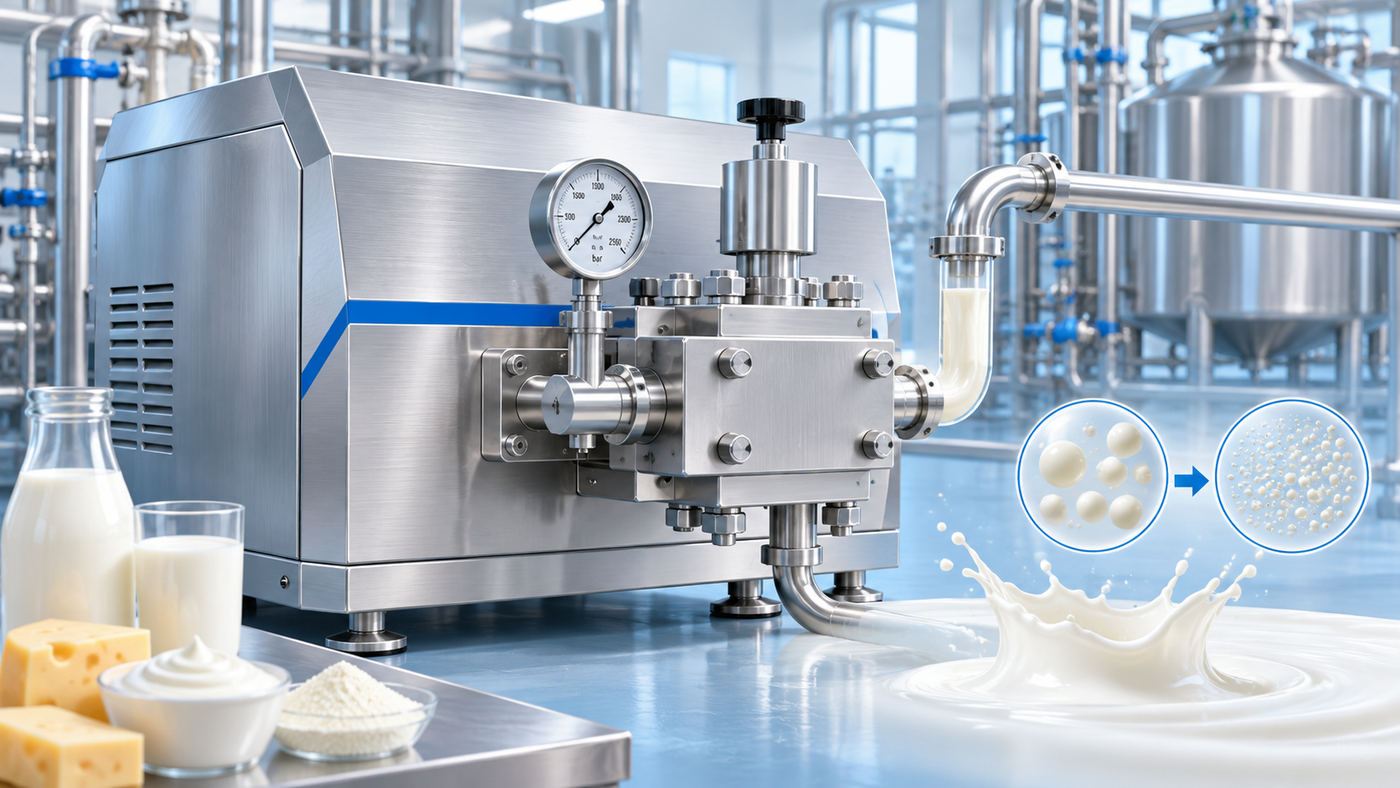
Figure 1 | Concept illustration of a dairy homogenizer and fat-globule reduction
1 | What Is Milk Homogenization?
In raw milk, fat is dispersed as globules within the aqueous phase. Without homogenization, these globules may rise and form a visible cream layer. A high-pressure pump drives milk through a narrow homogenizing valve gap, where turbulent flow breaks the globules into smaller droplets. Milk proteins and other surface-active constituents then cover the newly created interfaces.
For conventional dairy products, homogenization can improve resistance to creaming, appearance and mouthfeel. It does not replace pasteurization, UHT treatment or a product-specific stability assessment.
2 | How Does a High-Pressure Homogenizer Work?
A typical unit includes a feed system, high-pressure reciprocating pump, first-stage valve, optional second-stage valve, and control and safety systems. Most fat-globule disruption occurs across the first-stage valve. The second stage provides controlled backpressure and helps disperse clusters formed after the first stage.
Figure 1 illustrates the process concept; not every dairy line uses this exact arrangement.
Figure 2 | Two-stage milk homogenization (schematic)
| Preheat / feed | → | High-pressure pump | → | First-stage valve | → | Second-stage valve | → | Downstream process |
|---|
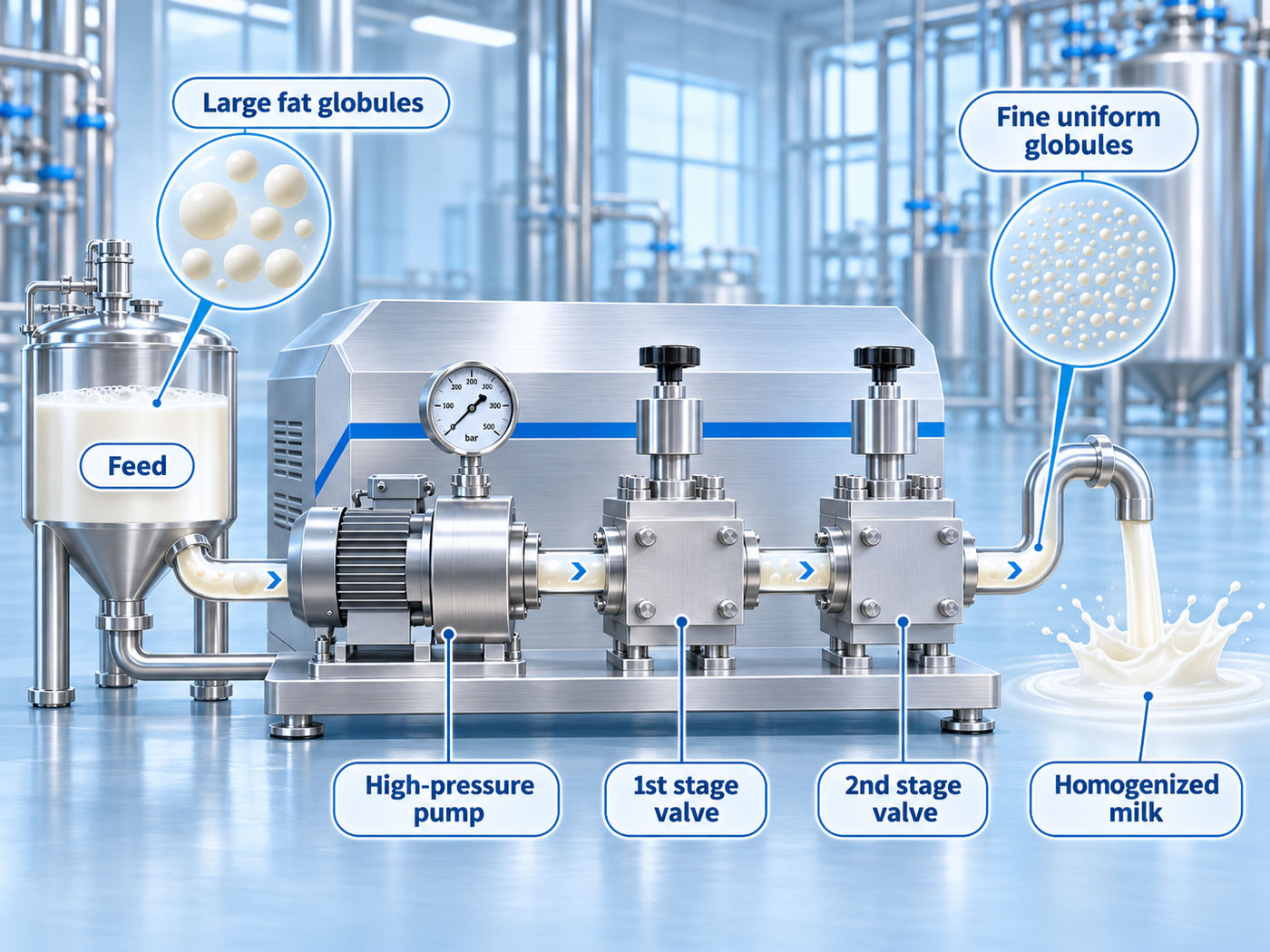
Figure 2 | Two-stage homogenization concept: high-pressure pump and first/second-stage valves
3 | Key Factors Affecting Homogenization
Pressure: Conventional milk homogenization often operates around 10–25 MPa (100–250 bar), although a given application may require a value outside this range. A greater effective pressure drop across the first-stage valve generally increases globule disruption; formulation, throughput, energy demand and stability must also be considered.
Temperature: Typical milk homogenization temperatures are approximately 55–80°C. Milk fat should be sufficiently liquid for effective disruption. The actual temperature is determined alongside heat treatment, protein behavior and equipment requirements.
Second-stage backpressure: There is no universally valid rule that it must equal 10–20% of first-stage pressure. Appropriate backpressure can suppress undesirable cavitation and disperse clusters. Excessive backpressure can reduce the effective first-stage pressure drop.
Formulation and flow: Fat level, available proteins, viscosity, stabilizers, operating temperature and throughput all affect the outcome. Standard milk settings should not be copied directly to high-fat or highly viscous products.
| Parameter | Typical dairy reference | Selection / validation |
|---|---|---|
| First-stage pressure | Often 10–25 MPa (100–250 bar) | Set for product, capacity and machine |
| Temperature | Often 55–80°C | Coordinate with thermal treatment |
| Second-stage backpressure | No universal fixed percentage | Tune for valve and product |
| Number of passes | Two-stage ≠ two passes | Evaluate multi-pass separately |
4 | Single-Stage, Two-Stage and Multiple-Pass Processing
Two-stage homogenization means the product passes through two valves in sequence during one pass. It does not mean that the same batch goes through the machine twice.
Multiple-pass processing means reprocessing the product through the equipment. It requires separate process design and trials. Two passes are not automatically better: extra processing may increase energy consumption, heat load or undesired structural changes.
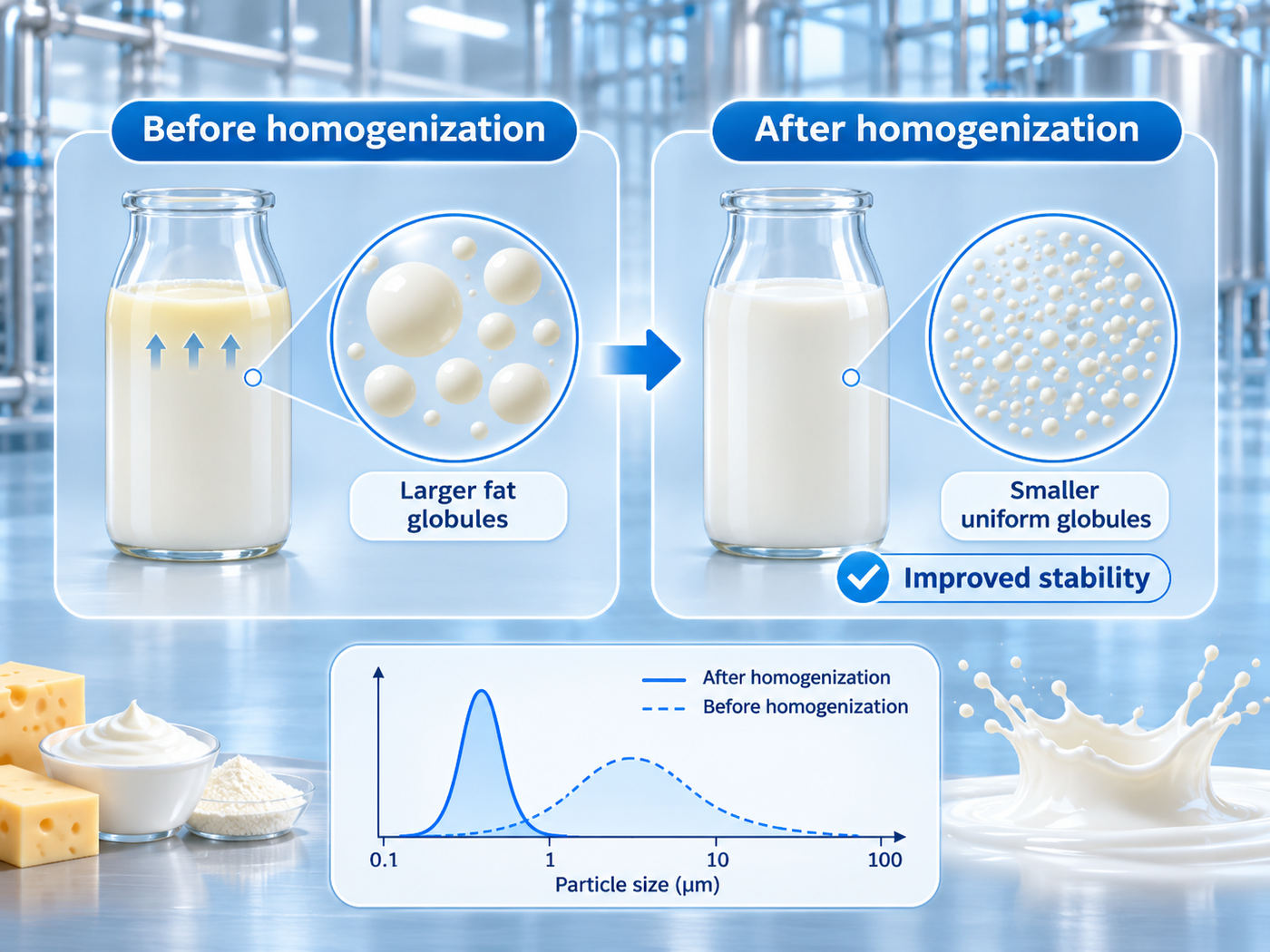
Figure 3 | Comparison of milk fat globules before and after homogenization
5 | Different Dairy Products Need Different Objectives
Drinking milk: Typically aims to slow cream separation and deliver consistent mouthfeel.
Cultured milk and yogurt base: Homogenization can influence gel texture, mouthfeel and whey separation; the result also depends on protein level, heat treatment and fermentation conditions.
Cheese milk: In some semi-hard and hard cheese processes, conventional homogenization may affect curd structure and whey drainage. Not every cheese line needs a homogenizer.
High-fat cream and formulated dairy beverages: Interfacial material, viscosity and fat aggregation become especially important and require formulation-specific trials.
| Product | Main objective | Key caution |
|---|---|---|
| Drinking milk | Reduce creaming; improve mouthfeel | Verify finished-product stability |
| Yogurt/cultured base | Texture and uniformity | Consider protein, heat and fermentation |
| Some semi-hard/hard cheeses | Check whether homogenization is needed | May affect curd and whey drainage |
| High-fat formulated drinks | Control aggregation and separation | Account for viscosity and composition |
5A | Which Dairy Lines Need Homogenization?
A homogenizer should be specified for the product and process—not simply added to an equipment list. A multi-product plant may require different homogenization strategies for different lines. The following is a decision guide, not a universal requirement.
| Product / processing line | Assessment | Purpose / caution |
|---|---|---|
| Pasteurized and ESL drinking milk | Commonly worth evaluating; full- or partial-stream | Reduce creaming and improve uniformity; coordinate with standardization and heat treatment |
| UHT milk, flavoured milk and milk drinks | Commonly evaluated; position depends on heat-treatment technology | Improve dispersion; aseptic design may be needed depending on process |
| Yoghurt and cultured-milk bases | Often beneficial | Support even fat distribution, texture and stability for suitable formulations |
| Ice-cream mix | Often relevant, formulation-dependent | Influences fat dispersion and subsequent structure; not the same settings as drinking milk |
| Cream and other fat-rich dairy products | Case-specific | Can improve emulsification, but excessive homogenization may cause clustering |
| Milk for semi-hard/hard cheeses | Not automatically recommended | May soften curd and impair whey drainage in some cheese processes |
| Skim-milk powder / skim-milk streams | Not inherently required | Choice depends on product functional specification and formulation |
| On-farm milk cooling and storage | Usually not essential | Cooling and hygiene matter more; homogenization does not replace refrigeration |
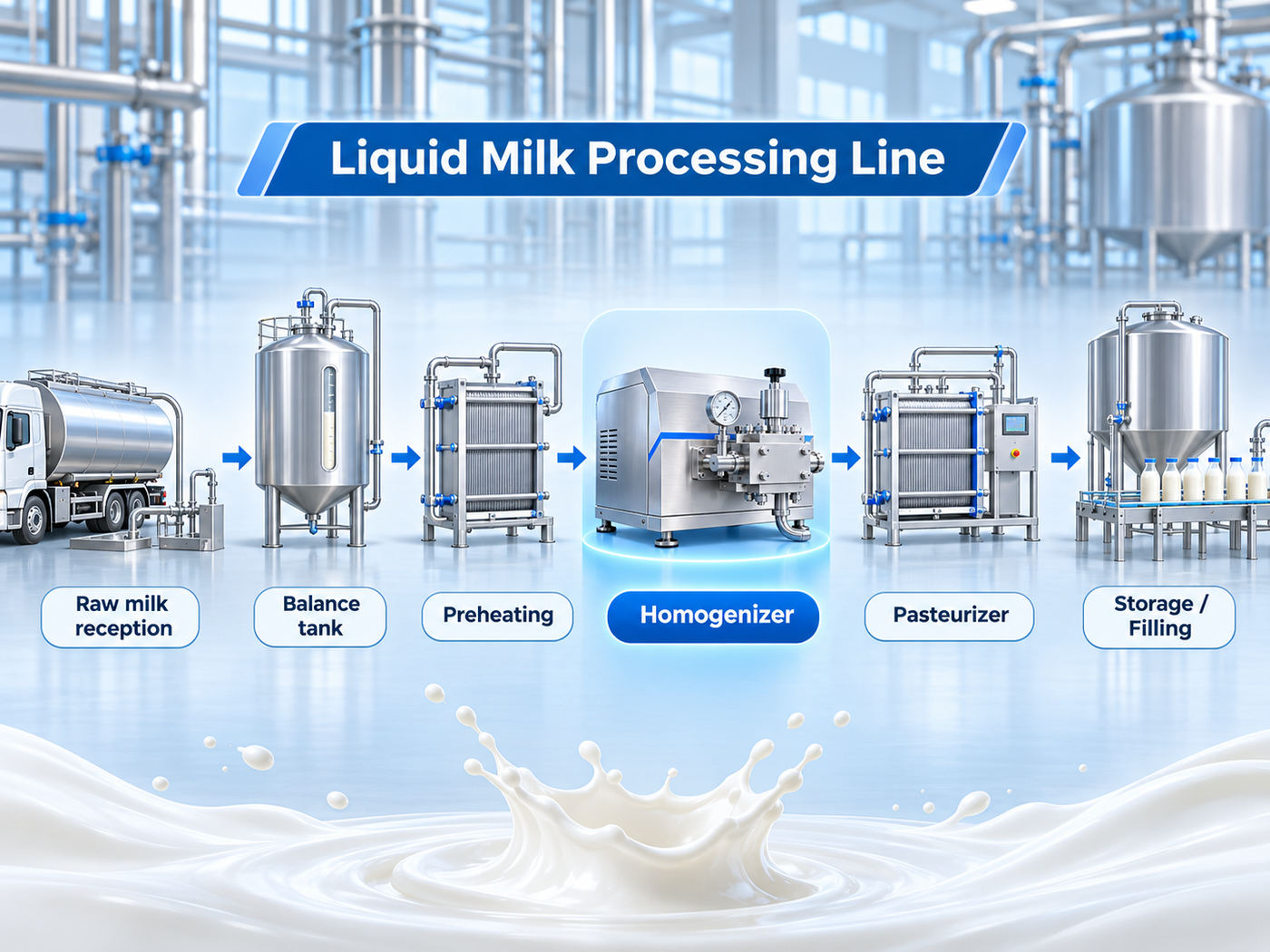
Figure 4 | Simplified liquid-milk line with a homogenization step; actual heat-treatment sequence depends on process design
6 | How to Verify Homogenization Performance
Particle-size distribution: Laser diffraction can be used to compare the volume-weighted mean D[4,3] and distribution curves, provided sample preparation is appropriate for milk.
Physical stability: Assess creaming, phase separation, sedimentation or relevant accelerated separation tests. Average particle size alone is not a shelf-life prediction.
Sensory and shelf life: Monitor mouthfeel, viscosity and appearance under intended storage conditions. Accelerated tests cannot fully replace real-time storage validation.
Figure 2 | Process validation loop
| Define product targets | → | Set pressure/temperature | → | Test size and stability | → | Verify sensory/shelf life | → | Confirm equipment settings |
|---|
7 | Choosing a Dairy Homogenizer
Provide suppliers with: (1) product and formulation; (2) actual hourly capacity (L/h); (3) fat, total solids and viscosity range; (4) upstream/downstream heat treatment and target temperature; (5) hygienic design, CIP and operating hours; (6) electricity, automation and maintenance requirements.
Do not compare machines by maximum pressure alone. Check continuous operating pressure at rated throughput, valve arrangement, wetted materials, seals, spares, energy use, cleanability, pressure protection and local service.
Placement differs between pasteurized, UHT and cultured-product lines. The final layout should be reviewed against the specific thermal process by an equipment supplier and process engineer.
7A | What Business Benefits Might a Dairy Owner Obtain?

Figure 5 | Potential business benefits for dairy processors.
• Fewer physical-separation-related losses: for suitable liquid products, a validated reduction in cream-line-related rejects, rework or returns may improve financial performance. Use actual factory baseline data rather than blanket claims.
• More consistent product presentation: better dispersion can improve appearance and mouthfeel for suitable products. It does not automatically justify a higher selling price.
• Potential new product opportunities: certain cultured milk, milk beverages and UHT lines may require appropriate homogenization. The economic benefit comes from verified incremental contribution margin.
• Potential lifecycle-cost optimization: partial-stream homogenization may reduce equipment size and pumping energy for certain pasteurized milk lines, subject to engineering review.
• Avoiding unnecessary capital expenditure: some cheese processes or farm-cooling applications do not require conventional homogenization; not buying unneeded equipment is also good investment management.
7B | Is a Homogenizer Worth the Investment? Two Business Scenarios
Dairy owners should assess more than maximum pressure and purchase price. For suitable products, homogenization can improve fat dispersion, appearance and mouthfeel, creating a technical basis for a higher-value product. However, any achievable price premium depends on formulation, packaging, brand, channels and customer acceptance. The following scenarios are separate illustrations; benefits must not be added together without checking for overlap.
Scenario A | Quality upgrade: RMB 0.20 additional contribution per liter
Assume a plant processes 3,000 L/day for 300 days, or 900,000 L/year. Suppose 40% (360,000 L) is sold as an upgraded product, earning RMB 0.20 more contribution per liter after extra packaging, promotion, channel and other variable costs. Assume incremental installed equipment cost of RMB 120,000 and added electricity, CIP and maintenance expenses of RMB 18,000/year. The RMB 0.20 refers to additional contribution margin, not an automatic retail price increase.
At 40% upgraded sales: 360,000 L × RMB 0.20/L = RMB 72,000/year additional contribution. After RMB 18,000/year added running cost, net incremental benefit is RMB 54,000/year; simple payback is 120,000/54,000 ≈ 2.2 years. These values are entirely hypothetical—not a DAIROOL quote or proven customer result. Unsold upgraded output, weak price realization or additional fixed investments could materially delay or prevent payback.
| Upgraded sales share | Upgraded annual volume | Extra contribution (RMB 0.20/L) | After RMB 18k annual cost | Simple payback |
|---|---|---|---|---|
| 20% | 180,000 L | RMB 36,000 | RMB 18,000 | ~6.7 years |
| 40% | 360,000 L | RMB 72,000 | RMB 54,000 | ~2.2 years |
| 60% | 540,000 L | RMB 108,000 | RMB 90,000 | ~1.3 years |
Validate the premium in four stages: (1) compare separation, droplet size, texture and shelf life; (2) assess sensory preference through blind testing or customer feedback; (3) test actual sales volume and achievable price in a limited launch; (4) calculate additional contribution after packaging, marketing, channel and processing costs. Never double-count the same benefit as both premium sales and avoided losses.
Scenario B | Fewer quality losses: count only verified avoidable losses
This scenario counts only independently verified avoided quality losses: annual net benefit = confirmed recovered volume × incremental contribution per recovered liter − added annual running cost. Simple payback = upfront investment / positive annual net benefit. Do not overlap with Scenario A.
Illustrative assumptions only: 3,000 L/day, 300 production days/year, or 900,000 L/year; installed cost RMB 120,000; additional annual electricity, CIP and maintenance RMB 18,000; contribution recovered per litre RMB 2. The scenarios vary only the verified loss-rate reduction attributable to homogenization; no selling-price increase is assumed.
| Verified loss reduction | Recovered RMB/year | Extra costs RMB/year | Net RMB/year | Simple payback |
|---|---|---|---|---|
| 1% | 18,000 | 18,000 | 0 | No payback |
| 2% | 36,000 | 18,000 | 18,000 | ~6.7 years |
| 3% | 54,000 | 18,000 | 36,000 | ~3.3 years |
All prices, costs and loss rates are hypothetical, not DAIROOL quotations or demonstrated savings. Returns caused by contamination, packaging, cold-chain failure, formulation or heat treatment cannot simply be credited to homogenization. Do not double-count benefits.
Before investment, collect product type and root-cause analysis; actual monthly losses/returns; contribution margin per litre; production days and line throughput; fully installed cost including CIP/spares; and comparative product-quality and shelf-life test results.
The correct question is not “How high is the pressure?” but “Does my product need homogenization, can its benefit be demonstrated, and does that benefit justify the total cost?”
ROI calculations are illustrative and are neither equipment quotations nor guaranteed returns. For a new plant, compare full-line capital and operating requirements with and without homogenization, as well as the target product specifications.
8 | Frequently Asked Questions
Q: Does higher pressure always improve stability? A: No. Pressure, formulation, temperature, flow and storage conditions interact.
Q: Does two-stage mean processing milk twice? A: No. Two-stage refers to two consecutive valves within a single pass.
Q: Is a homogenizer essential for all cheeses? A: No. Some cheese processes may be adversely affected by conventional homogenization.
Q: Does homogenization replace pasteurization? A: No. It primarily changes physical structure. Microbial safety still requires appropriate thermal treatment and hygienic controls.
9 | References and Technical Notes
Primary technical reference: Tetra Pak, Dairy Processing Handbook, Chapter 7.3, “Homogenizers” (online 2025 edition). https://dairyprocessinghandbook.tetrapak.com/chapter/homogenizers
Pressure and temperature ranges are general references for conventional milk processing, not guaranteed settings for any specific product or machine. Confirm production conditions with formulation trials, supplier documentation and shelf-life testing.
Editorial note: Unsupported universal claims in the source draft (including 30–200 MPa as a generic dairy range, fixed scaling rules, DHA bioavailability outcomes, mandatory double-pass optimization and a single accelerated shelf-life protocol) were removed or qualified.
DAIROOL can help evaluate homogenizer selection and preliminary line configuration based on product, capacity and processing conditions. [email protected] | www.dairool.com
Illustrations are schematic and for reference only.