

DAIROOL Knowledge Center | Dairy Processing Technology
Butter production is more than a list of machines. It is a controlled change in the structure of milk fat. Understanding that change helps dairy processors choose the right cream treatment, churn and working equipment without oversizing a small plant.
Process overview
Raw milk → chilled storage → cream separation → cream pasteurization → physical ripening → batch churning → buttermilk drainage → working → packaging → cold storage
1. Cream is an oil-in-water system
Fresh cream contains milk-fat globules dispersed in an aqueous phase. Each globule is surrounded by a membrane that helps keep fat droplets apart. Cream separation concentrates these globules; it does not, by itself, produce butter. A separator also creates a skim-milk stream that should be included in the plant-wide material balance.
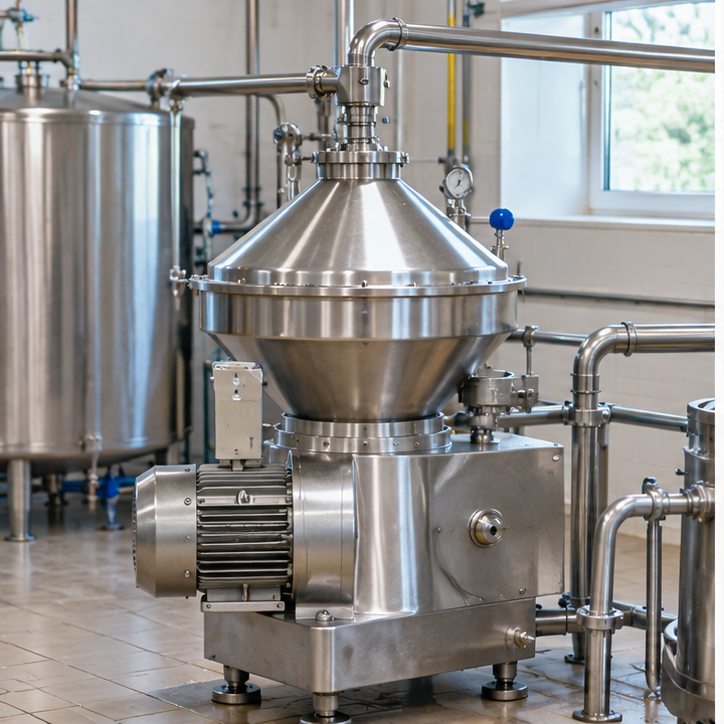
Cream separation principle.
2. Pasteurization and physical ripening prepare the fat
After appropriate pasteurization, cream is cooled and held under a planned temperature program. Part of the milk fat crystallizes, while some remains liquid. This balance affects whether churning proceeds efficiently and whether the finished butter becomes too hard or greasy. For cultured butter, starter cultures and acid development require additional process control; physical ripening and fermentation are not interchangeable.
3. Churning changes the emulsion
During churning, repeated impacts, air incorporation and contact between fat globules destabilize their protective membranes. Fat globules partially coalesce into visible butter grains, and a liquid buttermilk fraction separates. This is the key transition from an oil-in-water cream structure toward a water-in-oil butter structure. Churning temperature, cream composition, batch loading and machine geometry must be considered together.
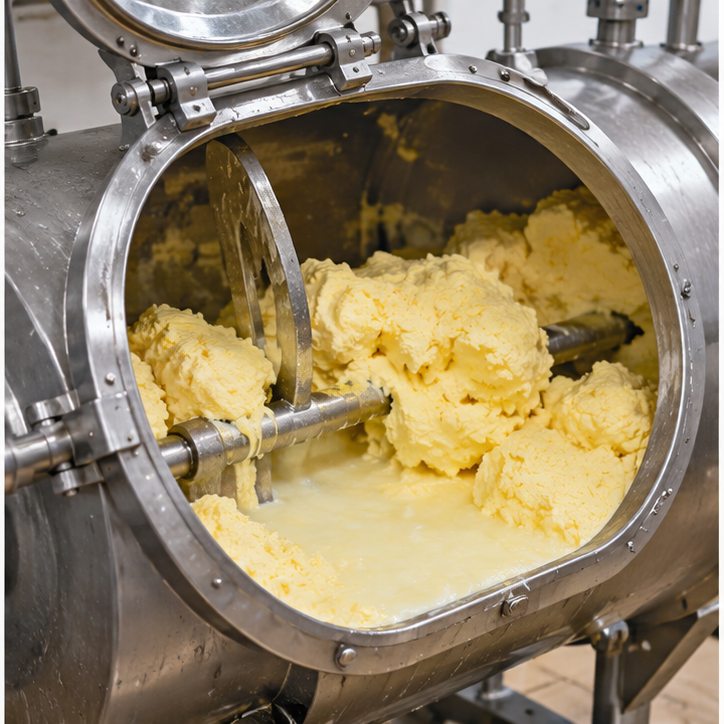
Butter-grain formation during churning.
4. Working gives butter its final structure
After buttermilk is drained, butter grains are worked into a continuous fat phase with small water droplets dispersed through it. Proper working improves texture and moisture distribution. Salt may be incorporated for salted butter. Washing is process-dependent and should not be presented as a universal mandatory step. Packaging and cold-chain management then protect product quality.
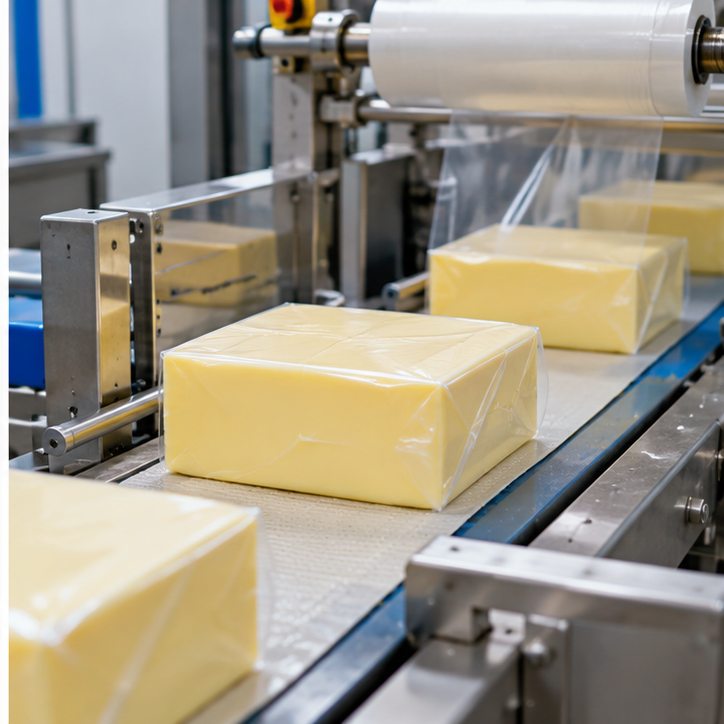
Butter working and packaging.
5. How to configure a small butter production line
A practical line usually includes milk reception and chilled storage, cream separation, cream heat treatment, physical ripening, batch churning, butter working, packaging and cold storage. Plants receiving prepared cream may not need an on-site milk separator. A batch churn can suit low-volume and multi-product dairies, whereas continuous equipment should be justified by actual throughput, shift pattern, labor and packaging requirements.
6. Questions to settle before requesting equipment
Confirm the target product (sweet-cream or cultured butter), available milk or cream per day, milk-fat percentage, intended butter output, batch schedule, packaging size, available utilities and the use of skim milk and buttermilk. Calculate a preliminary fat balance before selecting churn capacity. Do not treat indicative equipment capacities as guaranteed daily finished-product output.
7. Common misconceptions
A cream separator is not a complete butter line. More aggressive churning is not always better. A ripening tank is not necessarily a fermentation tank for every butter recipe. Skim milk and buttermilk are separate by-product streams with different properties and require a realistic utilization or disposal plan.
8. What DAIROOL can help evaluate
DAIROOL can help review the product specification, target throughput, process route and preliminary equipment layout for a small-batch butter facility or a multi-product dairy plant. Final operating parameters, food-safety controls, local regulatory requirements and product claims must be validated for the specific project.
Reference: Tetra Pak, Dairy Processing Handbook — Butter. Engineering note: These are general process principles, not validated operating instructions or equipment performance guarantees.
Illustrations are schematic and for reference only.