Acidification
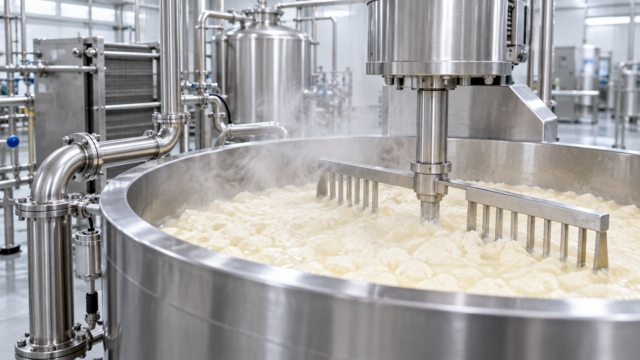
The curd must reach the appropriate acidification condition before stretching. pH monitoring helps operators identify when the curd is ready for the next stage and reduces reliance on experience alone.

Mozzarella · Suluguni · Provolone
From curd preparation and acidification to stretching and forming, we configure Pasta Filata production solutions around your target product, production capacity and operating requirements. The line can be configured for different batch sizes, production schedules and downstream processing requirements, with shared and product-specific equipment selected according to the actual project.
KEY PROCESS
The curd must reach the appropriate acidification condition before stretching. pH monitoring helps operators identify when the curd is ready for the next stage and reduces reliance on experience alone.
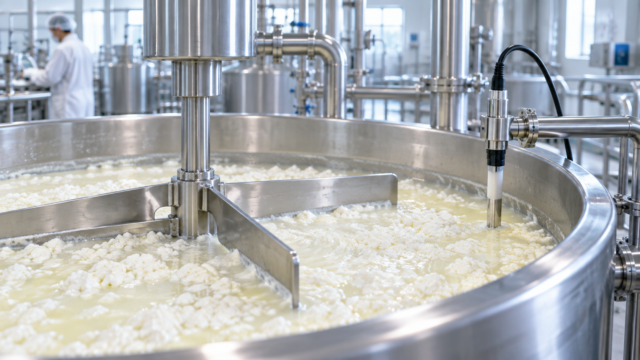
The acidified curd is heated into the required processing range before stretching. Controlled and even heating helps develop the required plasticity while reducing uneven softening or local overheating.
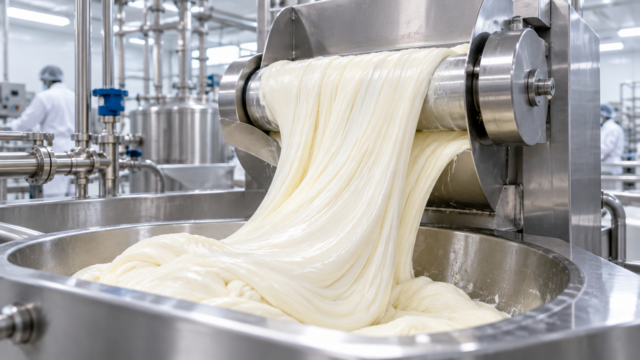
Under controlled temperature, time and mechanical action, the curd is stretched to develop the characteristic fibrous structure, elasticity and texture of Pasta Filata cheese.
OVERVIEW
PRODUCTION PLANNING
Planning Highlights
Approximately 6 batches per day. More concentrated production requires tighter coordination between batches and equipment.
500 L / batchA longer production window can change the required machine capacity, equipment quantity and batch arrangement.
Same Daily CapacityDaily volume alone does not determine the final production line.
Same Daily Capacity ≠ Same Line ConfigurationPROCESS FLOW
CORE EQUIPMENT
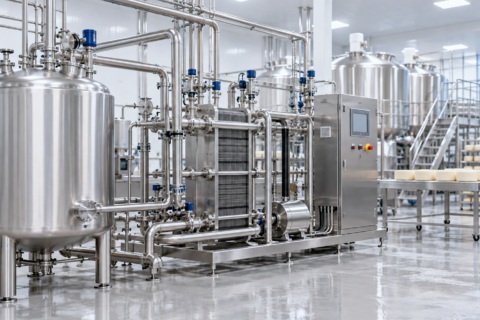
Provides controlled milk heat treatment before cheese making.
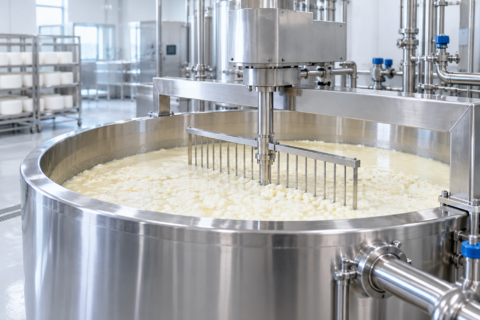
Supports coagulation, curd formation and controlled curd processing.
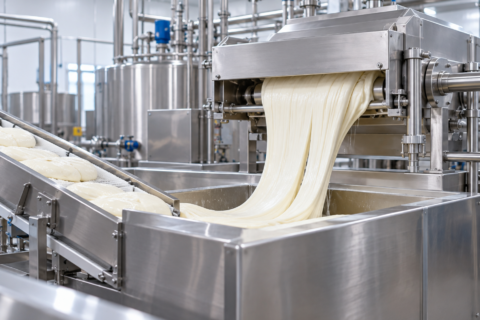
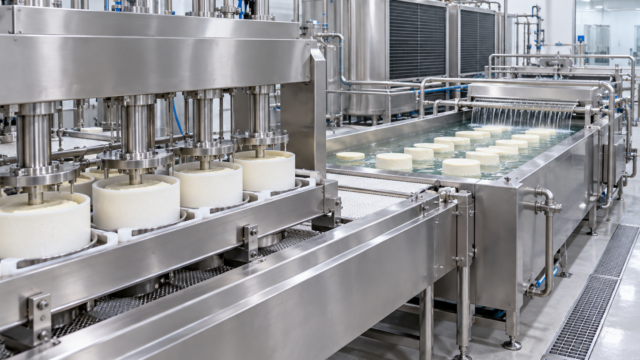
Heats and stretches acidified curd to develop the required Pasta Filata structure.
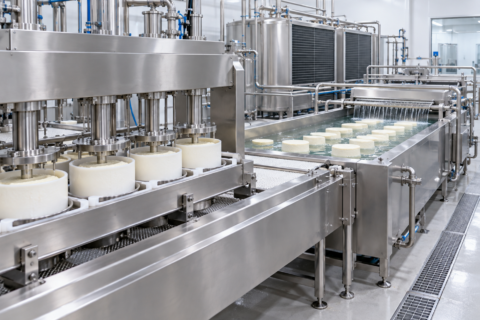
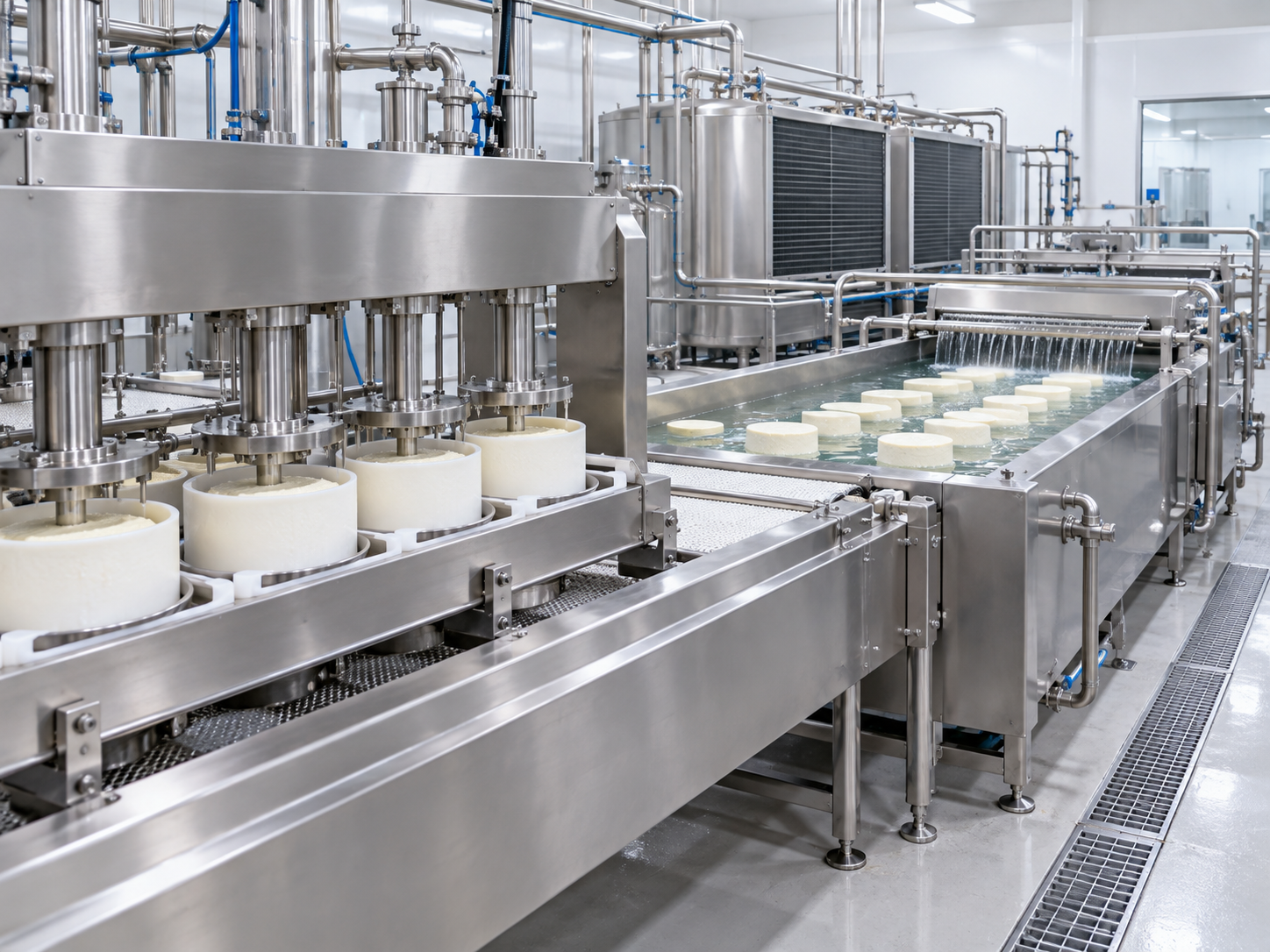
Forms the stretched cheese and supports downstream cooling or brining according to the target product.
CONFIGURATION
From Product Requirements to a Working Production System
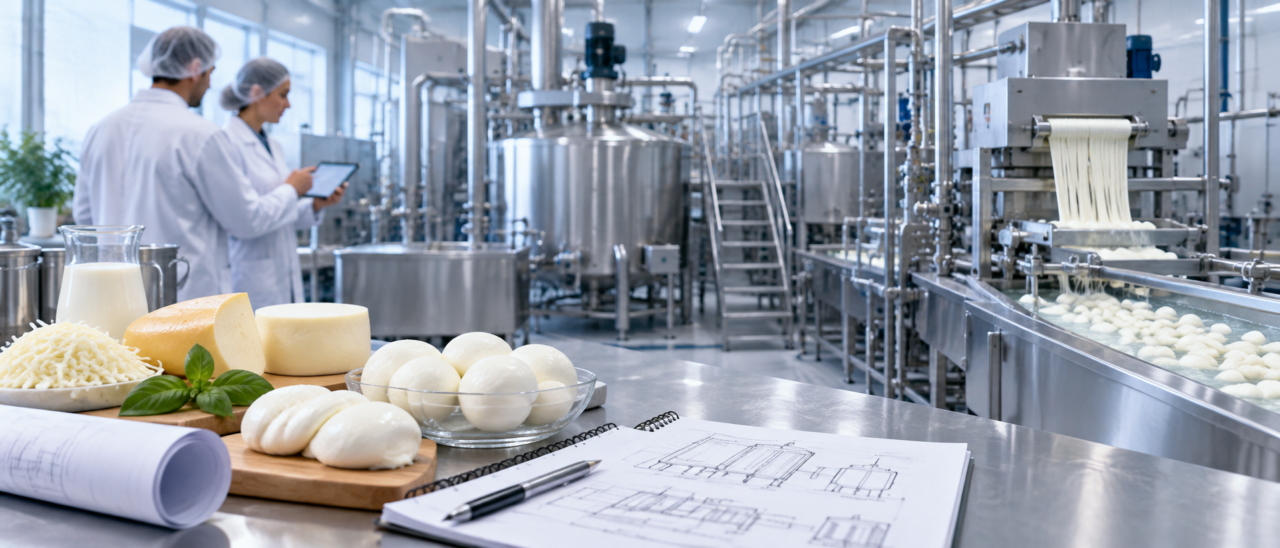
Every production line starts with the actual project requirements rather than a fixed machine list.
01 · Target Product
Define what products the line needs to produce.
02 · Production Basis
Confirm daily milk supply, batch size and operating schedule.
03 · Process & Equipment
Select the required process stages and configure the corresponding equipment.
04 · Working Production System
Combine processing equipment, utilities and control into a practical production line.
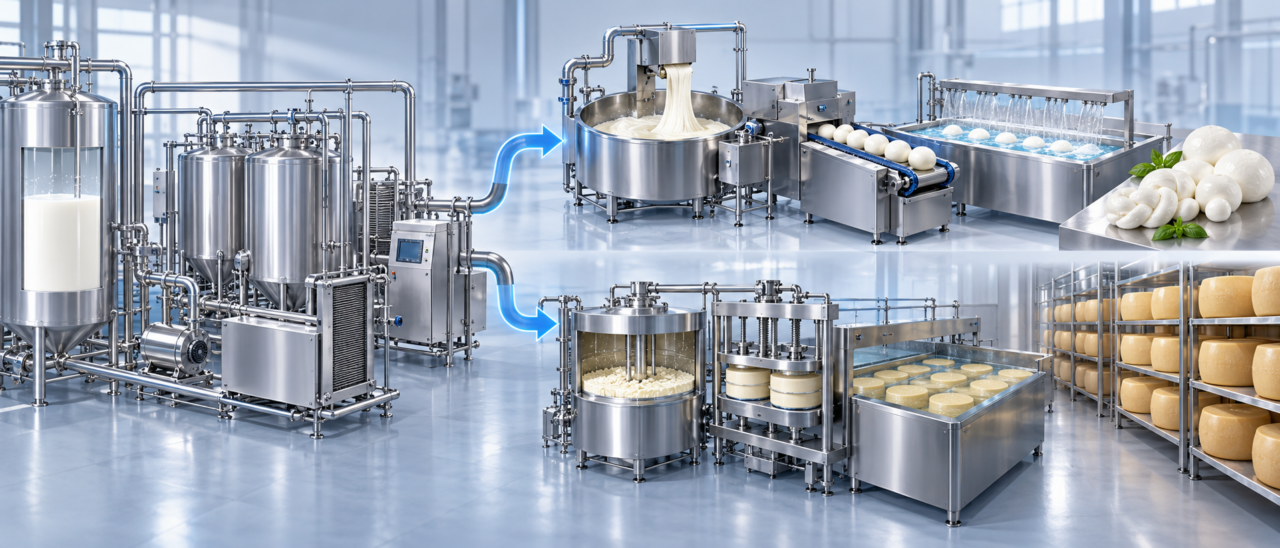
Flexible Cheese Production Routes
Shared upstream processing can support different downstream cheese routes according to the target product.
Route A · Pasta Filata
Acidification → Heating & Stretching → Forming → Cooling / Brining → Packaging
Suitable for: Mozzarella · Suluguni · Provolone
Route B · Semi-hard / Hard Cheese
Pressing → Brining → Ripening → Packaging
Suitable for: Gouda · Edam · Caciotta
Shared upstream equipment can be retained where practical, while downstream equipment is configured around the selected cheese route.
RELATED PRODUCTS
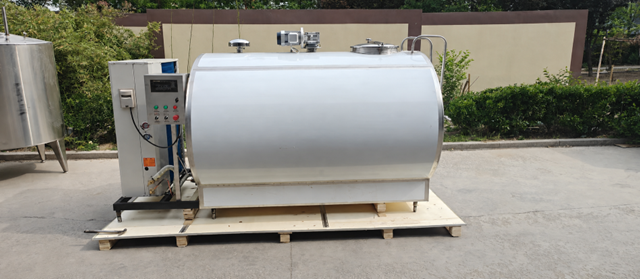
A horizontal, insulated direct-expansion cooling tank for rapid cooling and refrigerated storage of fresh milk. It is designed for dairy farms, milk collection centers…
View Product →A horizontal, insulated direct-expansion cooling tank for rapid cooling and refrigerated storage of fresh milk. It is designed for dairy farms, milk collection centers…
View Product →A horizontal, insulated direct-expansion cooling tank for rapid cooling and refrigerated storage of fresh milk. It is designed for dairy farms, milk collection centers…
View Product →PRODUCTION LINES
CASE STUDIES
KNOWLEDGE
Knowledge article pending
Knowledge article pending
Knowledge article pending
Knowledge article pending
Knowledge article pending
Knowledge article pending
Knowledge article pending
Knowledge article pending
FAQ
Content pending
Content pending
Content pending
Content pending
Content pending
Content pending
Content pending
Content pending
Content pending
Q&A
Content pending
Content pending
Content pending
Content pending
Content pending
Content pending
Content pending
Content pending