
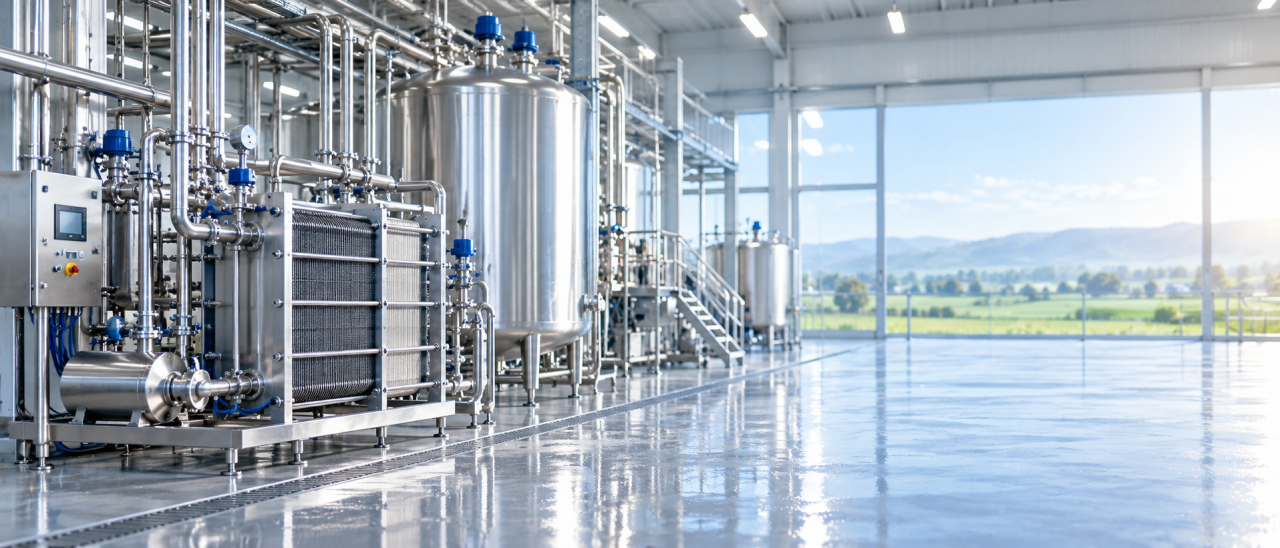
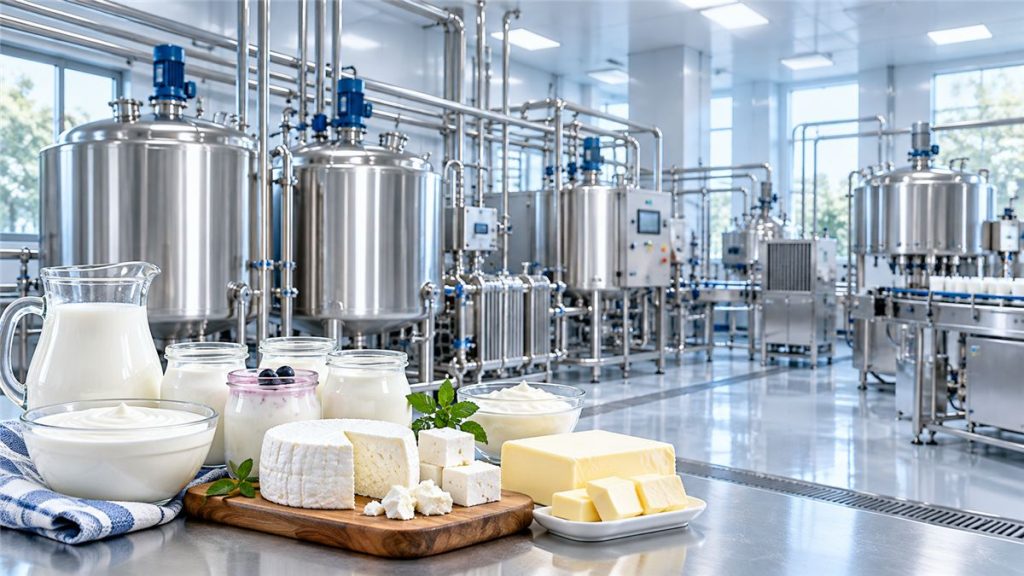
For small dairy farms, agricultural cooperatives and local dairy processors, turning raw milk into multiple dairy products can create new opportunities for product diversification and added value.
A dairy plant processing approximately 2,000–3,000 liters of raw milk per day may produce yogurt, fermented milk, fresh cheese, curd-based products, cream, butter and selected traditional dairy foods.
However, producing multiple dairy products does not necessarily mean installing a completely separate production line for every product. With suitable dairy plant design and layout, certain milk processing equipment can be shared, while dedicated processing modules are configured for each product category.
1. What Dairy Products Can a Small Plant Produce?
For a small dairy plant receiving approximately 2,000–3,000 liters of raw milk per day, the product range can be planned according to local market demand, raw milk composition and available processing capacity.
Potential products include:
- Yogurt and fermented milk products
- Fresh cheese and curd-based dairy products
- Cream, butter and selected clarified butter products
- Traditional dairy foods, including milk skin products
- Selected dairy-based desserts and bakery products
These products do not need to be manufactured simultaneously. Different processing modules can be operated according to a production schedule, provided that hygiene requirements, equipment capacity and product-specific processing conditions are met.
The key planning principle is to select the main products first, then determine which dairy processing equipment can be shared and which dedicated machines are required.
Actual finished-product output must be calculated from the raw milk allocation, product formulation, processing yield and operating schedule.
2. Shared Milk Processing Equipment: What Can Be Used Across Different Products?
In a small multi-product dairy processing plant, several dairy processing equipment systems may be shared across different product categories.
A common milk handling system typically includes raw milk reception, quality testing, filtration, cooling and sanitary transfer. Depending on the product, additional milk pasteurization, homogenization or separation processes may be required.
For a plant handling approximately 2,000–3,000 liters of raw milk per day, the shared equipment should be selected according to the actual production schedule, product mix and cleaning requirements.
Shared equipment does not mean that every product follows the same processing conditions. Yogurt, fresh cheese and cream products may require different heat treatments, fat standardization and downstream processing steps.
| Equipment | Main Function |
|---|---|
| Milk Cooling Tank | Cooling and temporary storage of raw milk |
| Milk Testing Equipment | Checking raw milk quality parameters |
| Sanitary Milk Filter | Removal of physical impurities |
| Milk Pasteurization Machine | Product-specific heat treatment |
| Milk Homogenizer | Homogenization for suitable dairy products |
| Sanitary Pumps and Pipelines | Hygienic transfer between processing stages |
| CIP Cleaning System | Cleaning compatible tanks and pipelines |
| Control System | Monitoring and control of relevant equipment operating parameters |
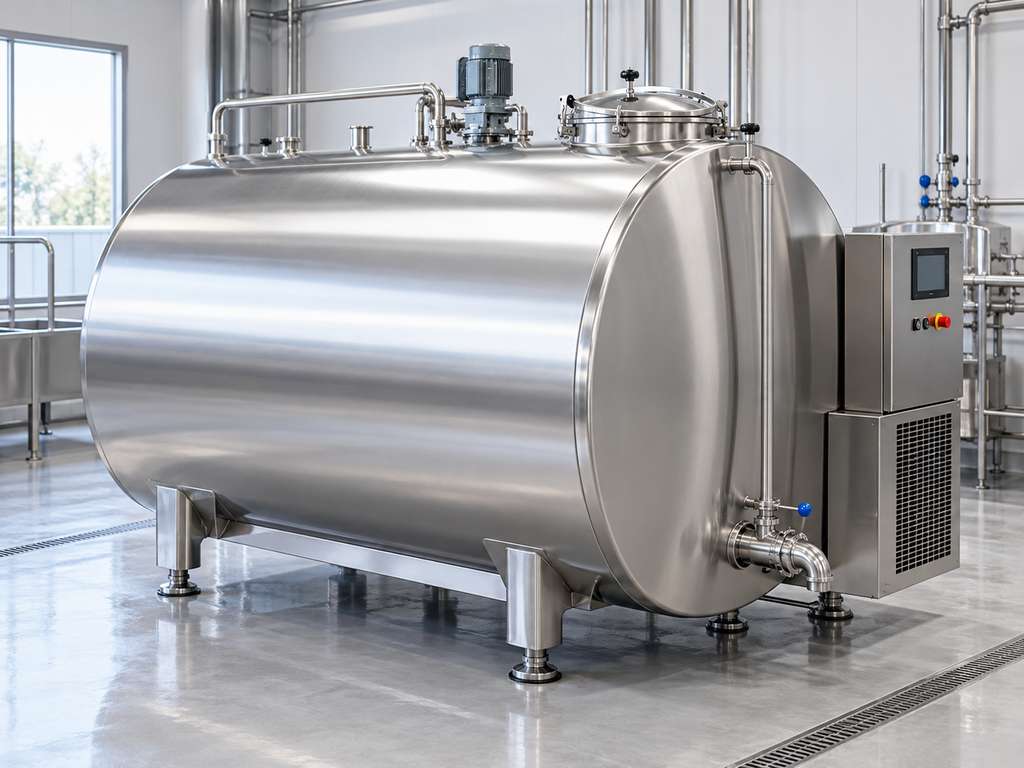
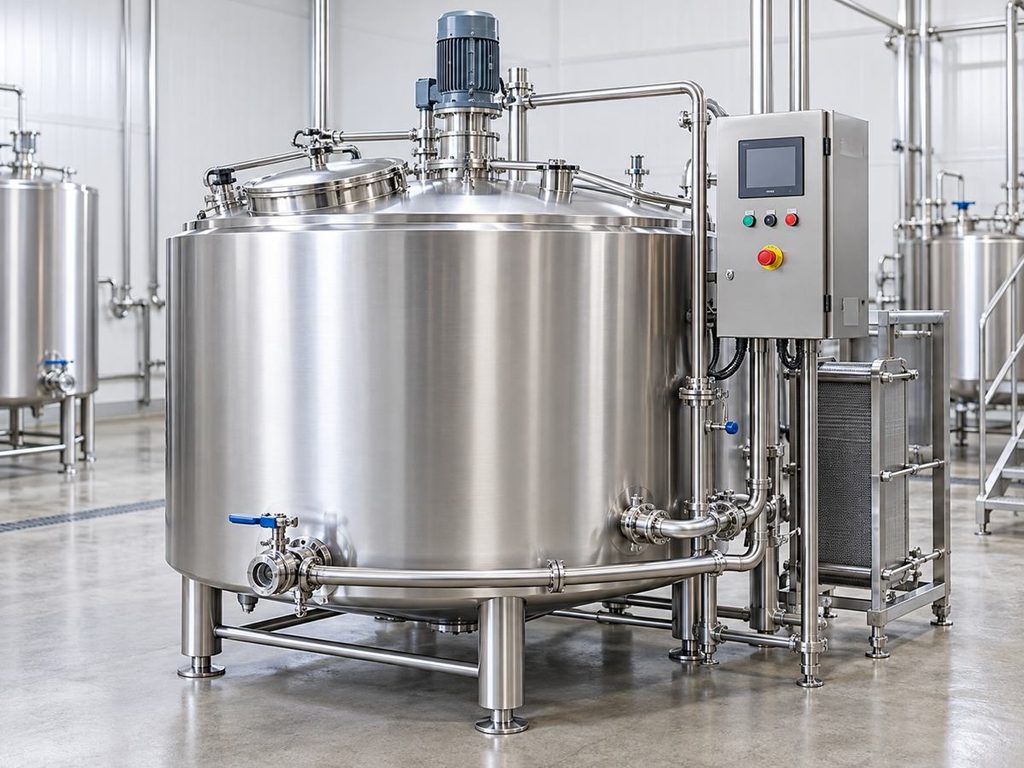
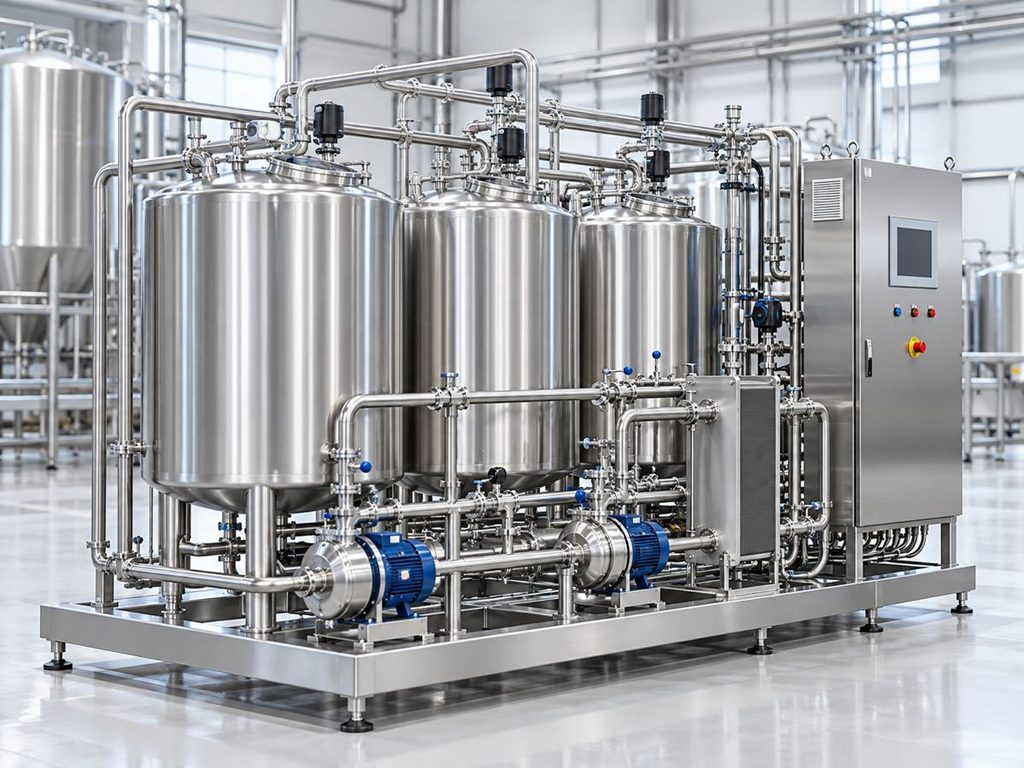
Left to right: Milk Cooling Tank · Batch Milk Pasteurizer · CIP Cleaning System
3. Product-Specific Dairy Processing Modules
Once the shared milk processing equipment has been planned, the next step is to select dedicated processing modules for each target dairy product.
The equipment configuration depends on the product type, production volume, processing method, packaging requirements and available utilities.
The following examples illustrate how different dairy products can be matched with their main processing steps and equipment. Actual configurations should be confirmed through product-specific process design and capacity calculations.
3.1 Yogurt and Fermented Milk Processing
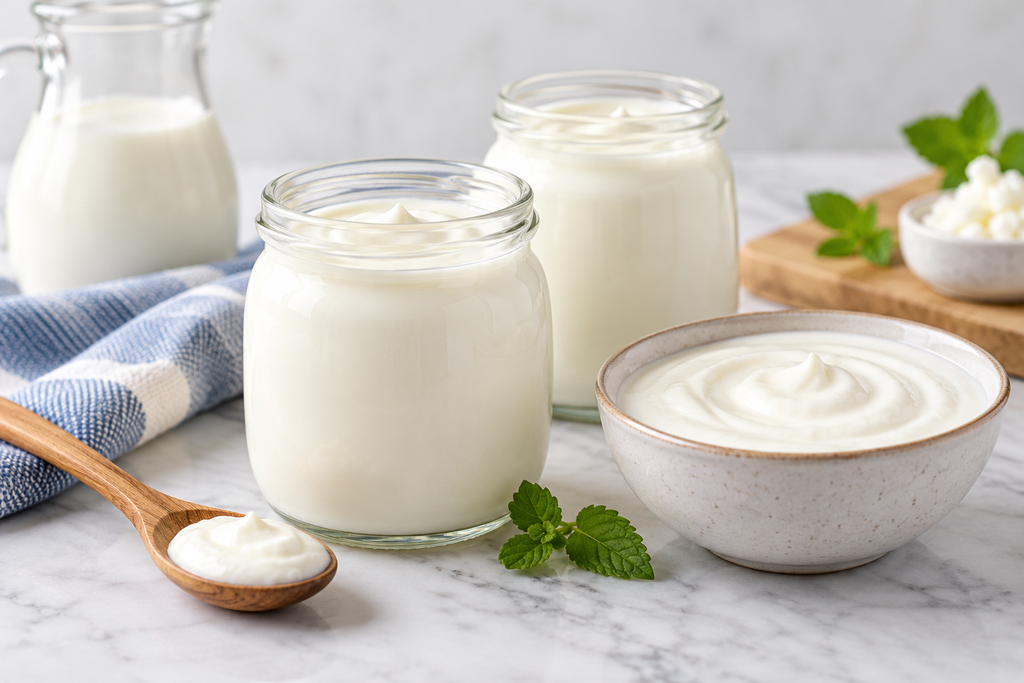
Yogurt and fermented milk production typically involves milk standardization, heat treatment, cooling, starter culture inoculation, controlled fermentation, and subsequent cooling and packaging.
For a small dairy processing plant, the production system may combine shared milk handling equipment with dedicated fermentation, cooling and filling equipment.
The actual production capacity depends on fermentation time, working tank volume, cooling capacity, cleaning cycles and the selected packaging format.
Milk Preparation → Heat Treatment → Cooling & Inoculation → Fermentation → Cooling → Packaging
| Equipment | Main Function |
| Milk Pasteurizer | Product-specific heat treatment |
| Milk Homogenizer | Homogenization where required |
| Fermentation Tank | Controlled fermentation |
| Cooling / Storage Tank | Cooling and temporary holding |
| Yogurt Filling Machine | Filling into selected packages |
| CIP Cleaning System | Cleaning compatible equipment |
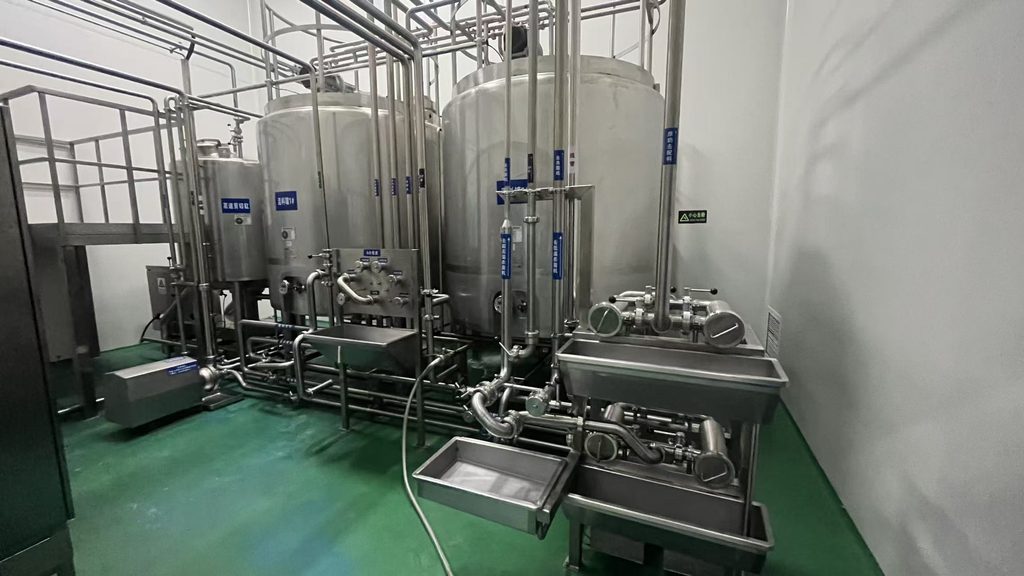
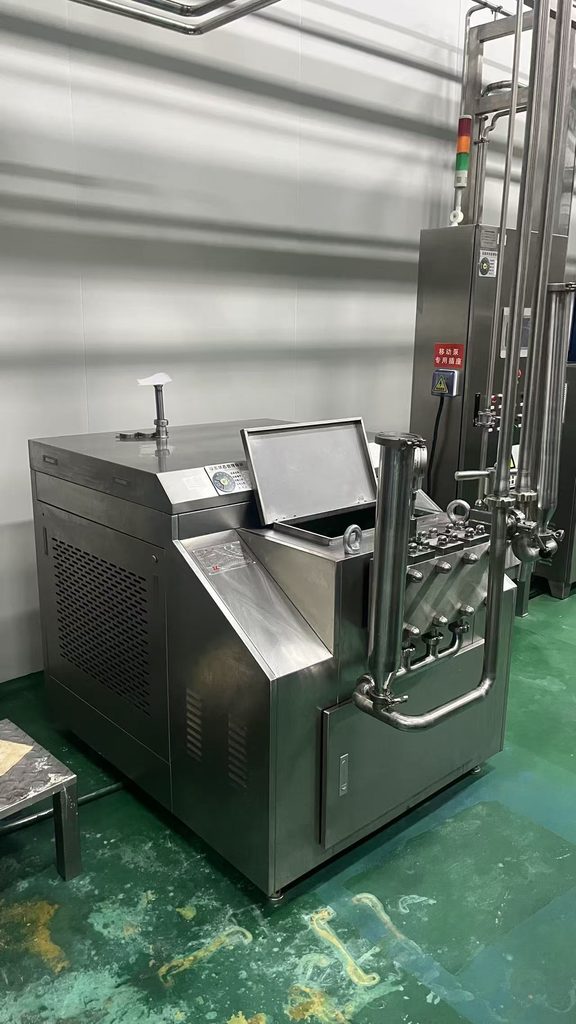
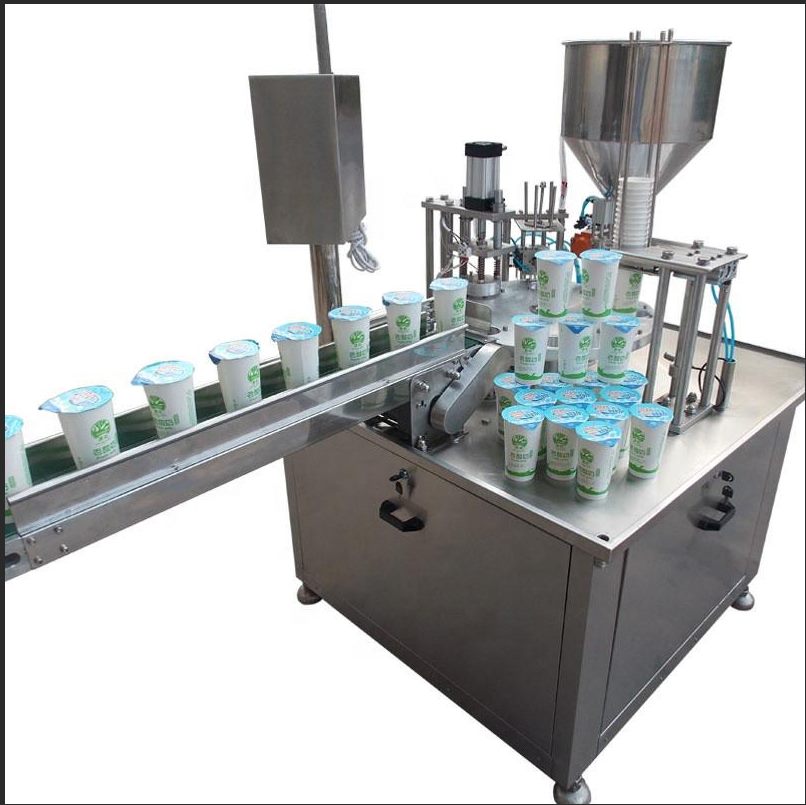
Left to right: Yogurt Fermentation Tanks · Milk Homogenizer · Yogurt Filling Machine
A 500L fermentation tank does not necessarily provide 500L of finished yogurt per day. Actual daily capacity depends on usable tank volume, fermentation time, cooling, discharge, cleaning and production scheduling.
For plants planning to process 2,000–3,000 liters of raw milk per day, additional fermentation capacity may be required depending on the proportion of milk allocated to yogurt production.
For a customized yogurt processing equipment configuration, contact DAIROOL with your daily milk volume, target products and preferred packaging format.
3.2 Fresh Cheese and Curd-Based Dairy Products
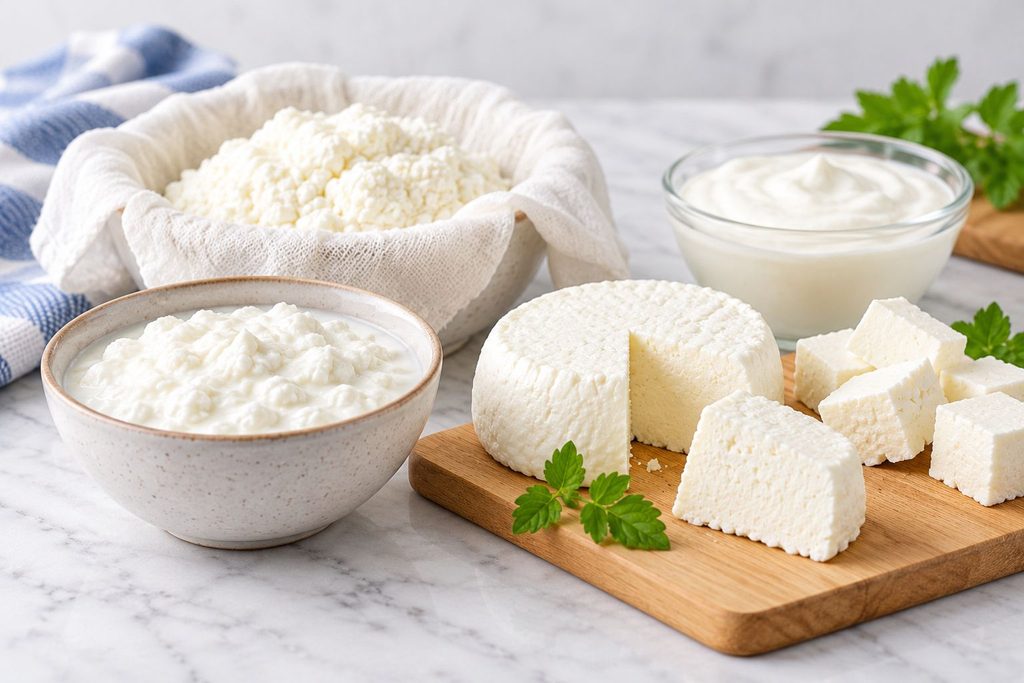
Fresh cheese and curd-based dairy products can be produced through different coagulation, heating and whey separation processes, depending on the desired product.
For traditional milk curd products, the processing equipment may include a heating and stirring kettle, whey separation equipment, a cheese press, forming molds and cutting machines.
Different types of fresh cheese may require dedicated cheese vats, curd cutting tools, draining systems or other specialized equipment. Equipment selection should therefore begin with the specific product and its processing requirements.
Typical Curd-Based Dairy Processing
Milk Preparation → Coagulation / Product-Specific Heating → Whey Separation → Forming / Pressing (if required) → Cutting → Packaging
| Equipment | Main Function |
| Curd Processing Kettle / Cheese Vat | Product-specific heating or curd processing |
| Whey Separation Equipment | Separation of curd and whey |
| Cheese Press | Pressing and shaping where required |
| Forming Molds | Product shaping |
| Curd / Cheese Cutting Machine | Cutting into required sizes |
| Packaging Equipment | Packaging according to product requirements |
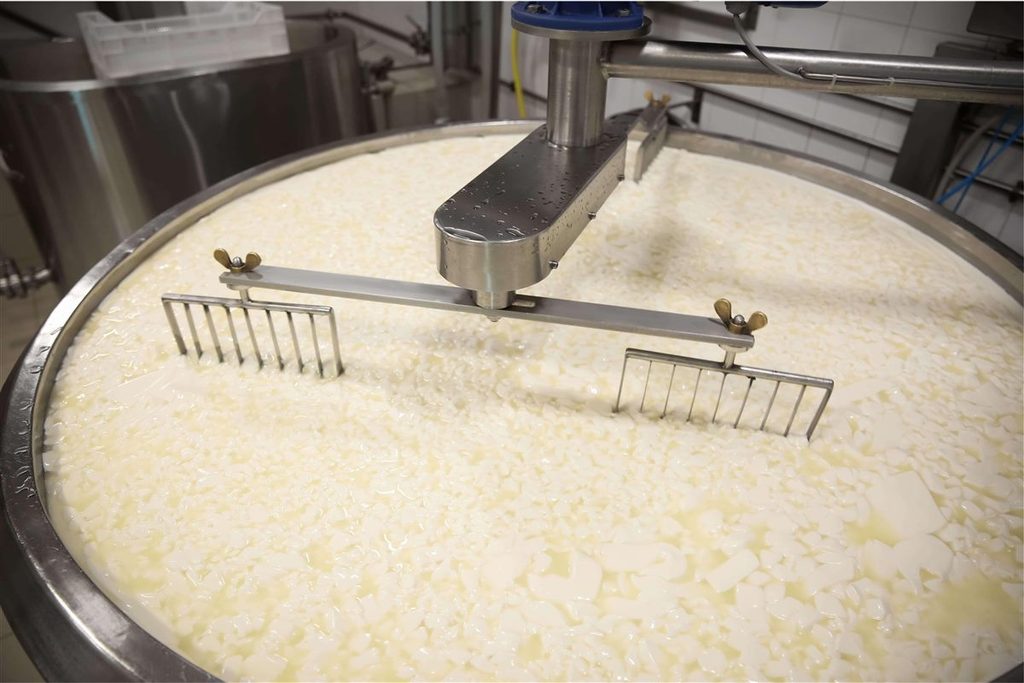
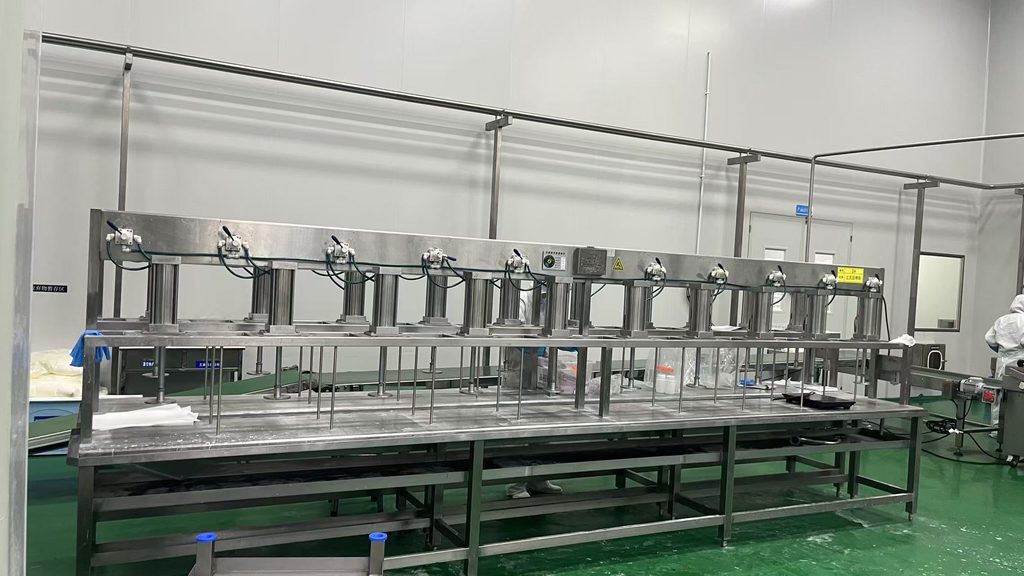
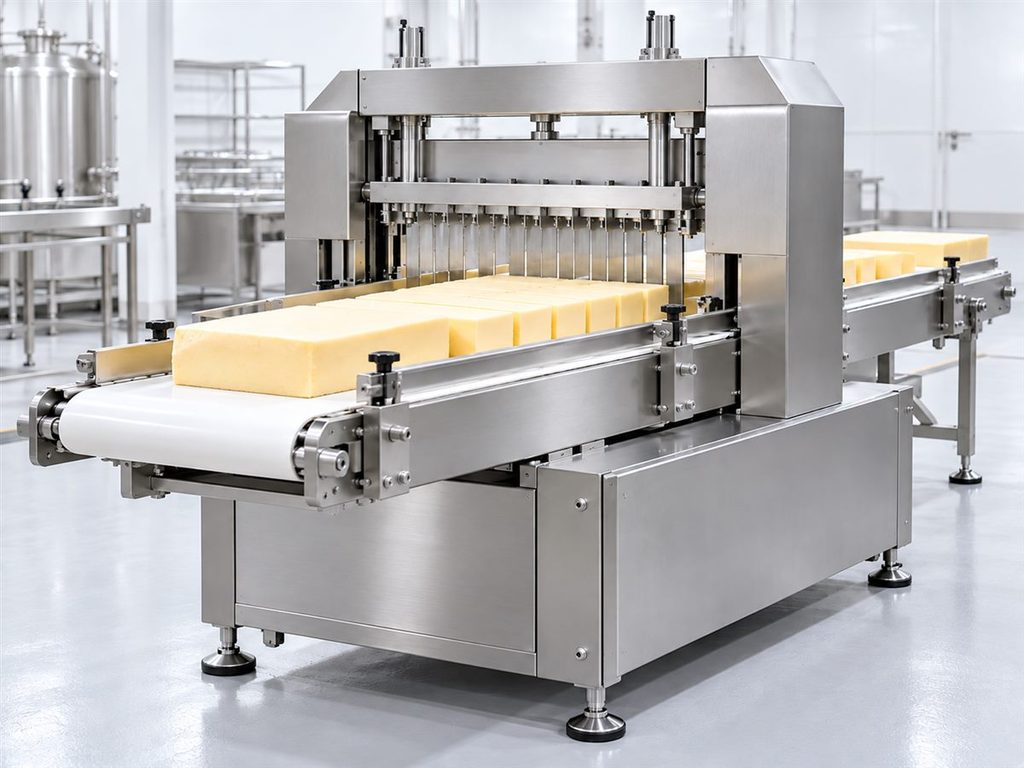
Left to right: Cheese Curd Processing Vat · Cheese Press / Draining Equipment · Cheese Cutting Machine
Traditional milk curd processing equipment is not necessarily suitable for all fresh cheese varieties. Products such as Mozzarella and Caciotta may require different curd handling, stretching, salting or maturation processes.
For a small multi-product dairy plant, equipment compatibility and processing capacity should be confirmed before combining traditional curd products with other cheese varieties.
Explore our Cheese Production Line solutions for product-specific equipment configurations, including curd processing, pressing, stretching and maturation.
3.3 Traditional Dairy Products Processing
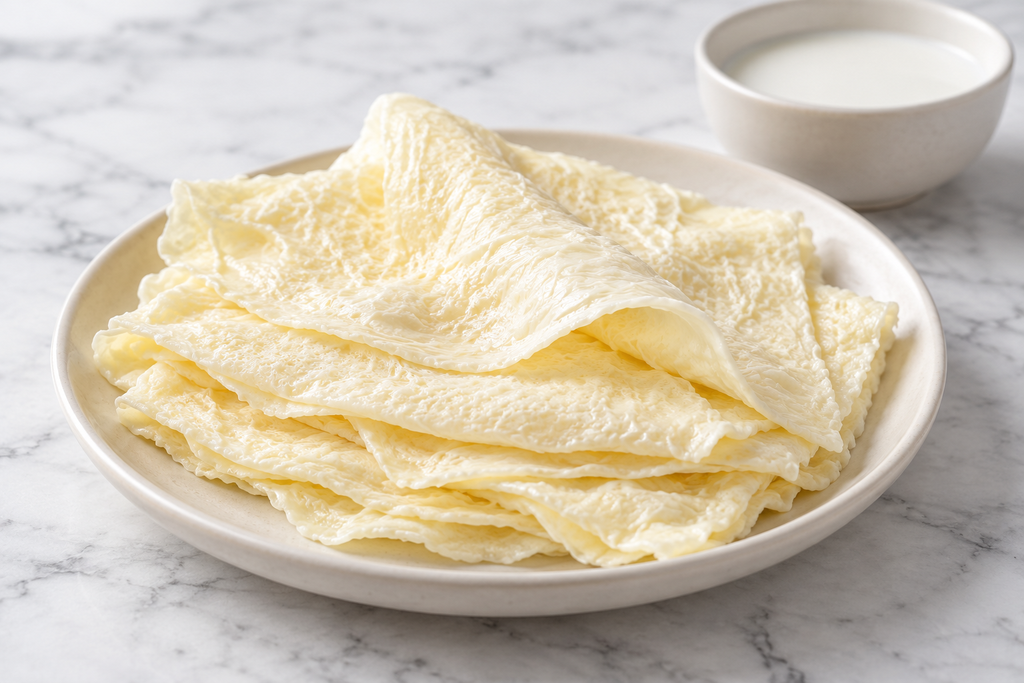
Traditional dairy products remain important in many pastoral regions, including parts of Central Asia and northern China. These products often involve specialized heating, concentration, surface film formation, molding or drying processes.
For example, traditional milk skin products may require controlled heating and surface film formation, while other milk-based specialties can involve stirring, concentration or forming equipment.
Unlike standardized yogurt or cheese production, traditional dairy processing equipment should be selected according to the specific product recipe, processing method and desired finished-product characteristics.
Example: Traditional Milk Skin Processing
Milk Preparation → Controlled Heating → Surface Film Formation → Film Collection → Product-Specific Cooling / Drying → Packaging
| Equipment | Main Function |
| Multi-Pan Milk Skin Machine | Controlled heating and milk skin formation |
| Stainless Steel Milk Skin Pans | Heating and surface film formation |
| Dairy Cooking / Stirring Kettle | Processing selected traditional dairy foods |
| Concentration / Cooking Kettle | Concentration or cooking where required |
| Forming Molds | Shaping suitable traditional dairy products |
| Cooling / Drying Racks | Product-specific cooling or drying |
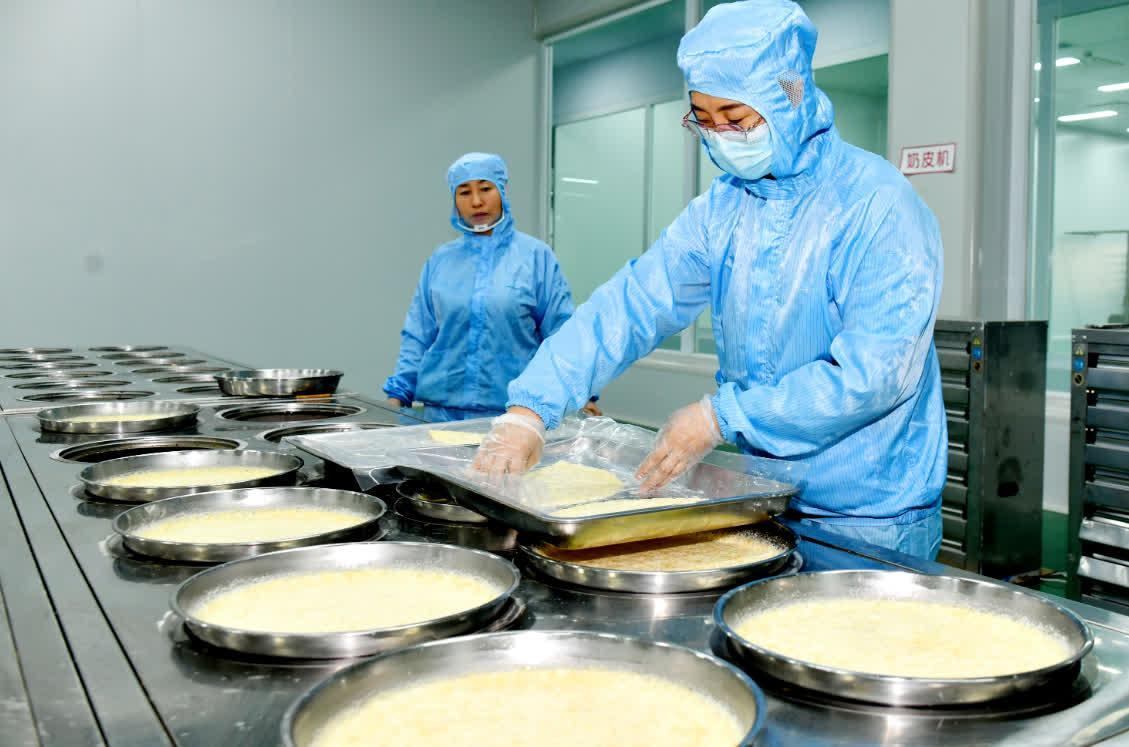
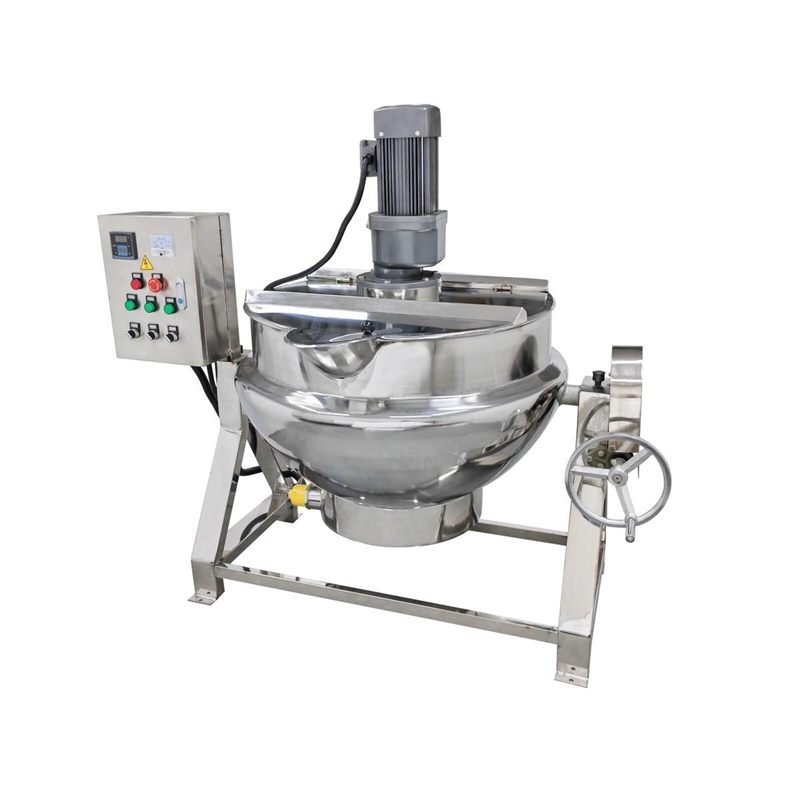
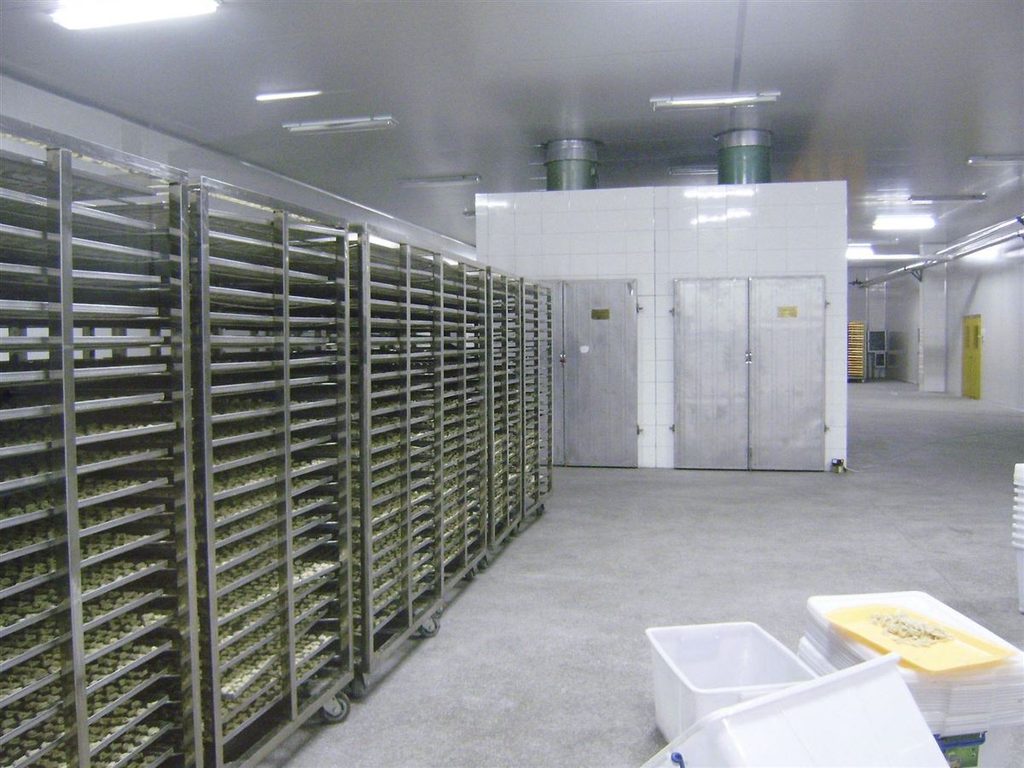
Left to right: Milk Skin Processing Pans · Jacketed Heating and Stirring Kettle · Drying and Cooling Racks
Traditional dairy processing methods vary significantly by region and product. Equipment capacity, heating method, cleaning requirements and finished-product quality should be verified through product-specific processing trials.
For a small multi-product dairy plant, traditional dairy equipment can be configured as an optional module rather than included in every standard production line.
3.4 Cream, Butter and Clarified Butter Processing
Cream, butter and clarified butter products are produced through different milk fat separation and processing methods. The equipment configuration depends on the target product, milk fat content, production capacity and required product characteristics.
A milk cream separator can separate raw milk into cream and skim milk. The collected cream may then undergo product-specific heat treatment, cooling, maturation or further processing.
For butter production, additional butter churning and working equipment may be required. Clarified butter or ghee-type products generally involve further controlled heating and moisture removal, followed by suitable filtration, cooling and packaging.
Typical Cream and Butter Processing Routes
Milk Preparation → Cream Separation → Cream Heat Treatment → Cooling → Packaging
Cream Separation → Cream Treatment → Churning → Buttermilk Drainage → Butter Working → Packaging
Suitable Butter or Cream Feedstock → Controlled Heating → Moisture Removal → Filtration → Cooling → Packaging
| Equipment | Main Function |
| Milk Cream Separator | Separation of cream and skim milk |
| Cream Pasteurization Equipment | Product-specific cream heat treatment |
| Cream Cooling / Storage Tank | Cooling and temporary holding |
| Butter Churn | Churning cream to produce butter |
| Butter Working Equipment | Improving butter texture and consistency |
| Clarified Butter Processing Kettle | Controlled heating and moisture removal |
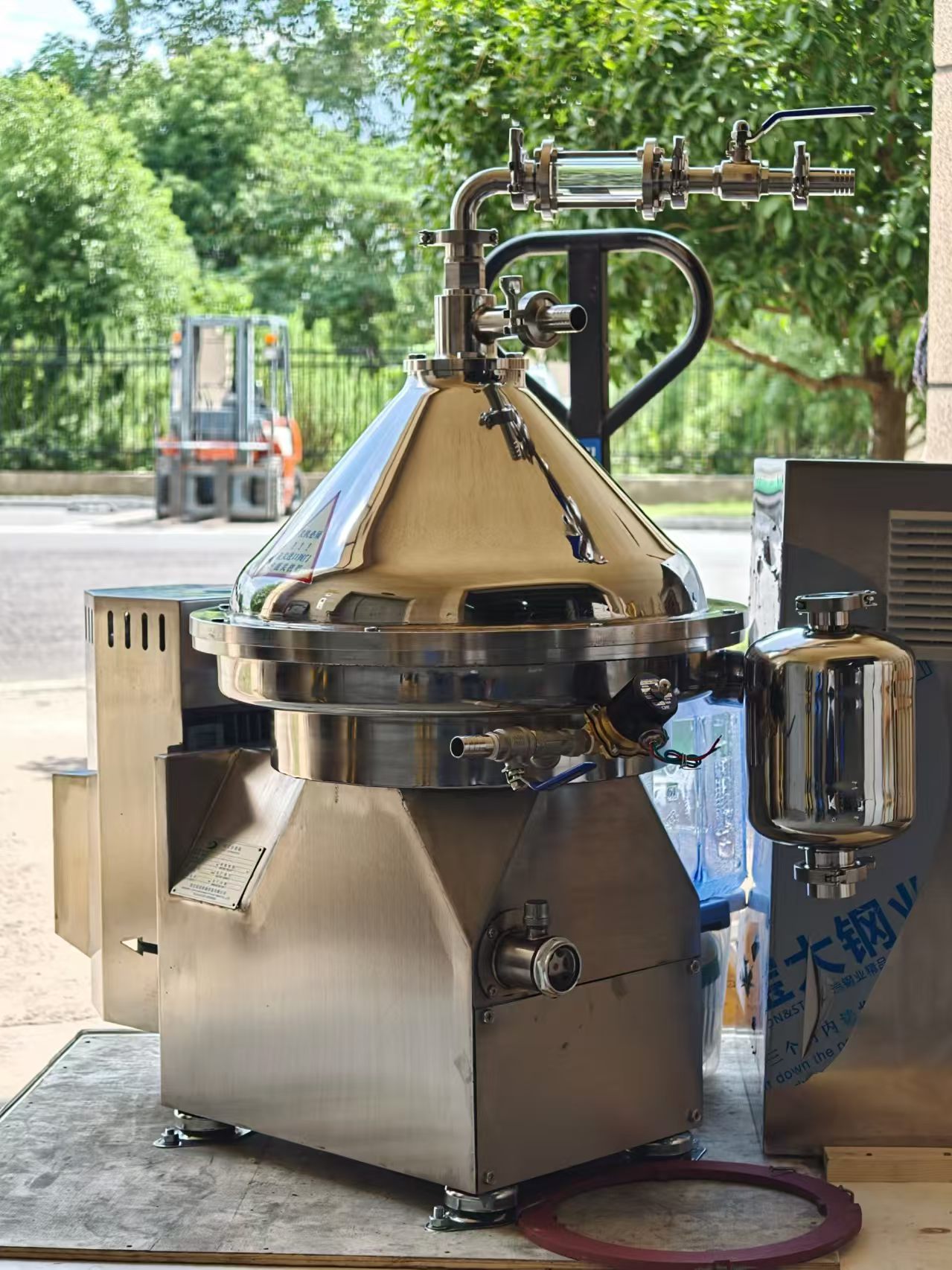
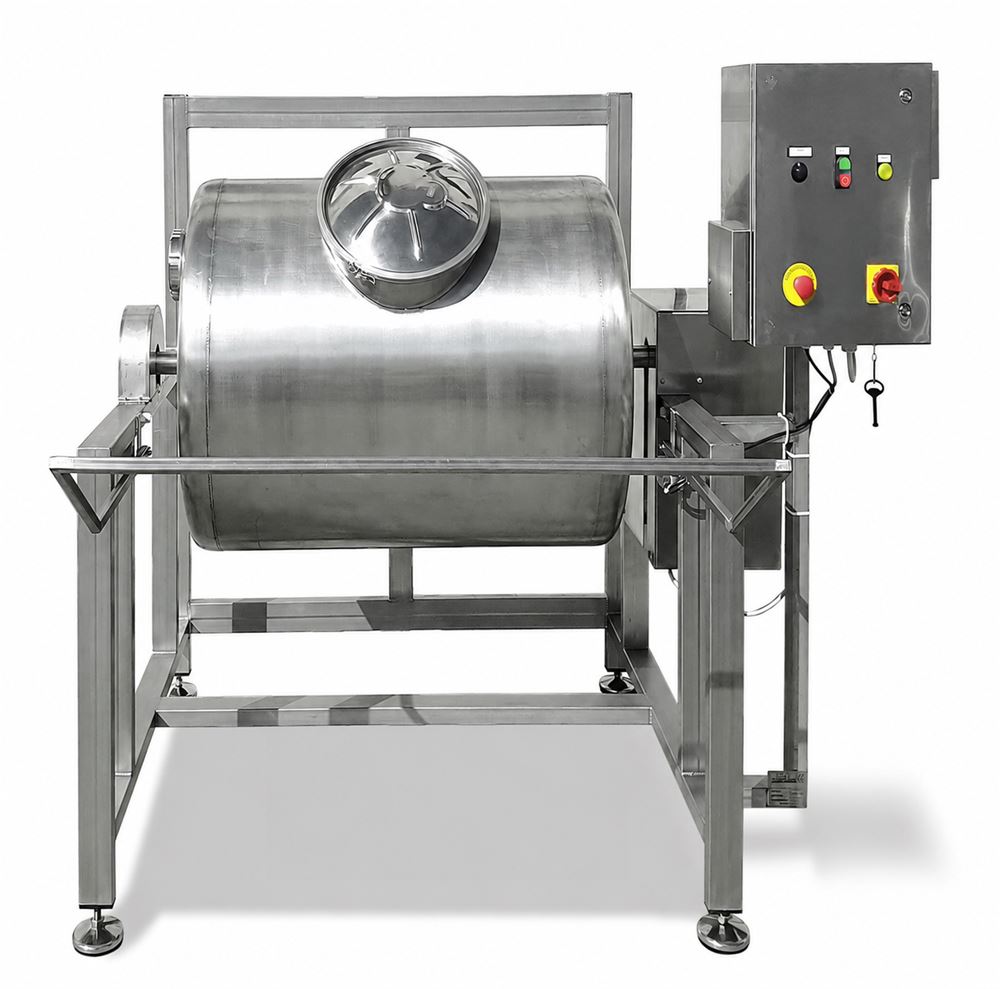
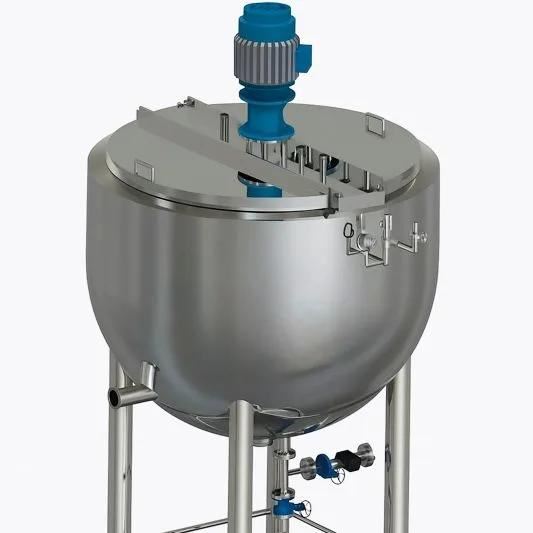
Left to right: Cream Separator · Butter Churn · Butter Melting / Clarification Kettle
A milk cream separator alone does not constitute a complete butter production line. Butter manufacturing requires additional processing steps and suitable equipment.
For a small multi-product dairy plant, cream separation may be integrated with other milk processing operations. However, raw milk allocation, cream yield, skim milk utilization and production scheduling must be evaluated together.
Equipment should be selected according to the intended product specifications, rather than assuming that butter, traditional clarified butter and ghee-type products use identical processing methods.
4. How to Plan Production Capacity for a 2,000–3,000 L/day Dairy Plant
A dairy plant designed to process 2,000–3,000 liters of raw milk per day should not be sized simply by adding together the rated capacities of individual machines.
The first step is to determine how much raw milk will be allocated to each product category, including yogurt, fresh cheese, traditional dairy products, cream and butter.
Production planning should consider batch size, processing time, heating and cooling cycles, fermentation time, cleaning requirements and the availability of shared equipment.
For example, a plant handling 3,000 liters of milk per day may allocate 1,200 liters to yogurt, 1,200 liters to cheese production and 600 liters to other dairy products. This is an illustrative planning scenario, not a fixed production formula.
Actual daily output depends on milk composition, product yield, equipment working volume, processing losses and the selected production schedule.
The objective is to balance equipment utilization, production flexibility and future expansion rather than maximize the nominal capacity of every machine.
| Product Category | Daily Milk Allocation |
| Yogurt & Fermented Milk | 1,200 L |
| Fresh Cheese & Curd Products | 1,200 L |
| Other Dairy Products | 600 L |
Illustrative milk allocation for a 3,000 L/day multi-product dairy plant. Actual production plans require product-specific calculations.
5. Dairy Plant Layout, Utilities and Hygienic Design
For a small multi-product dairy processing plant, factory layout should be planned around material flow, equipment accessibility, personnel movement and hygienic production requirements.
A practical layout generally separates raw milk reception, milk preparation, heat treatment, product-specific processing, packaging and finished product storage. The arrangement should minimize unnecessary material movement and reduce the risk of cross-contamination.
When several dairy products are manufactured in the same facility, additional attention should be given to production scheduling, cleaning procedures and the separation of incompatible processing activities.
Utilities such as electricity, hot water or steam, cooling water, compressed air, drainage and cleaning facilities should be evaluated according to the selected equipment and production processes.
| Planning Area | Main Considerations |
| Raw Milk Reception | Milk testing, filtration and initial cooling |
| Processing Area | Equipment layout, workflow and maintenance access |
| Packaging Area | Hygienic filling and packaging operations |
| Cold Storage | Product-specific storage temperatures |
| Heating & Cooling Utilities | Hot water, steam and cooling capacity |
| Cleaning & Drainage | CIP compatibility, water supply and wastewater discharge |
The required factory area cannot be determined from daily milk intake alone. Equipment dimensions, product diversity, storage requirements, personnel flow and future expansion plans must all be considered.
Final equipment layout and utility requirements should be confirmed through project-specific engineering design.
6. Equipment Investment Planning and Phased Implementation
For a small multi-product dairy processing plant, equipment investment should be based on the intended product mix, daily raw milk intake, available utilities and expected production schedule.
Purchasing separate processing equipment for every dairy product may increase initial investment and create unnecessary duplication. A more practical approach is to identify which equipment can be shared and which product-specific modules must be installed independently.
However, equipment sharing should only be considered when processing requirements, cleaning procedures and production schedules are compatible.
A phased investment strategy can help dairy processors manage their initial capital requirements while retaining flexibility for future product development and capacity expansion.
| Investment Stage | Equipment Scope | Planning Objective |
| Stage 1: Core Infrastructure | Milk reception, cooling, heat treatment, pumps and essential utilities | Establish basic processing capability |
| Stage 2: Priority Products | Selected fermentation, cheese or cream processing modules | Launch the initial product range |
| Stage 3: Packaging & Storage | Product-specific filling, packaging and cold storage | Support commercial production |
| Stage 4: Future Expansion | Additional processing capacity, automation and specialized equipment | Expand output and product diversity |
The stages above illustrate investment priorities rather than a mandatory installation sequence. Essential packaging, storage and food safety systems must be in place before commercial production begins.
The lowest initial equipment cost does not necessarily result in the lowest overall project cost. Installation requirements, utility consumption, cleaning efficiency, maintenance, spare parts and future upgrades should also be considered.
A well-planned dairy processing project should balance initial investment, production flexibility, operational efficiency and long-term development.
Before finalizing equipment procurement, dairy processors should confirm their target products, daily milk allocation, packaging formats, available factory space and utility conditions.
7. Conclusion: Plan Your Multi-Product Dairy Plant with DAIROOL
A small multi-product dairy processing plant requires more than a collection of individual machines. Successful project planning depends on matching the selected dairy products with suitable processing equipment, production capacity, factory layout and utility conditions.
For plants handling approximately 2,000–3,000 liters of raw milk per day, a well-planned combination of shared equipment and product-specific processing modules can help improve production flexibility and reduce unnecessary equipment duplication.
DAIROOL supports dairy processors in evaluating equipment configurations, production workflows and integrated processing solutions according to their project requirements.
What Information Do We Need to Prepare Your Dairy Processing Solution?
- Daily Raw Milk Volume – Expected daily milk intake in liters.
- Target Dairy Products – Yogurt, fresh cheese, traditional dairy products, butter or other products.
- Production Allocation – Estimated milk volume assigned to each product category.
- Factory & Utility Conditions – Available floor space, electricity, water supply and heating sources.
- Packaging & Investment Requirements – Preferred packaging formats, project budget and expected implementation schedule.
Planning a small multi-product dairy processing plant?
Share your daily milk volume, target products and project requirements with DAIROOL. Our team can help you evaluate suitable equipment configurations and develop a preliminary processing solution.
Contact DAIROOL to discuss your dairy processing project.